
U.S. Environmental Coalition Successes: Documented Case Studies
The strongest examples of environmental coalition successes in the United States share a common architecture: a narrow, non-negotiable goal, diverse stakeholder alignment, and measurable outcomes that hold up to scrutiny. The cases below are the ones practitioners should study first.
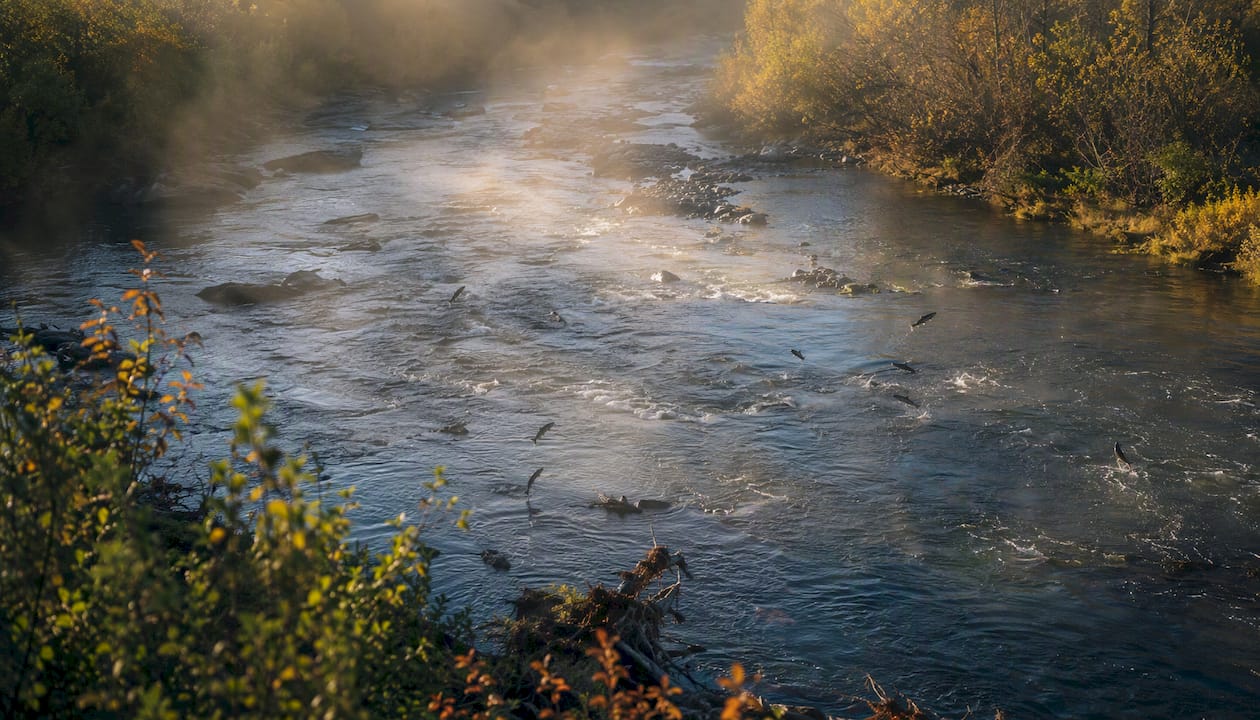
Klamath River dam removal (2023–2024): tribal-led coalition, four dams removed, largest dam removal in U.S. history, natural Chinook hatchings recorded within 18 months
EPA EJ CPS grantees (ongoing): Pacoima Beautiful, Make the Road by Walking, and Indochinese Cultural and Service Center secured policy wins and environmental improvements in frontline communities through $100,000 cooperative agreements
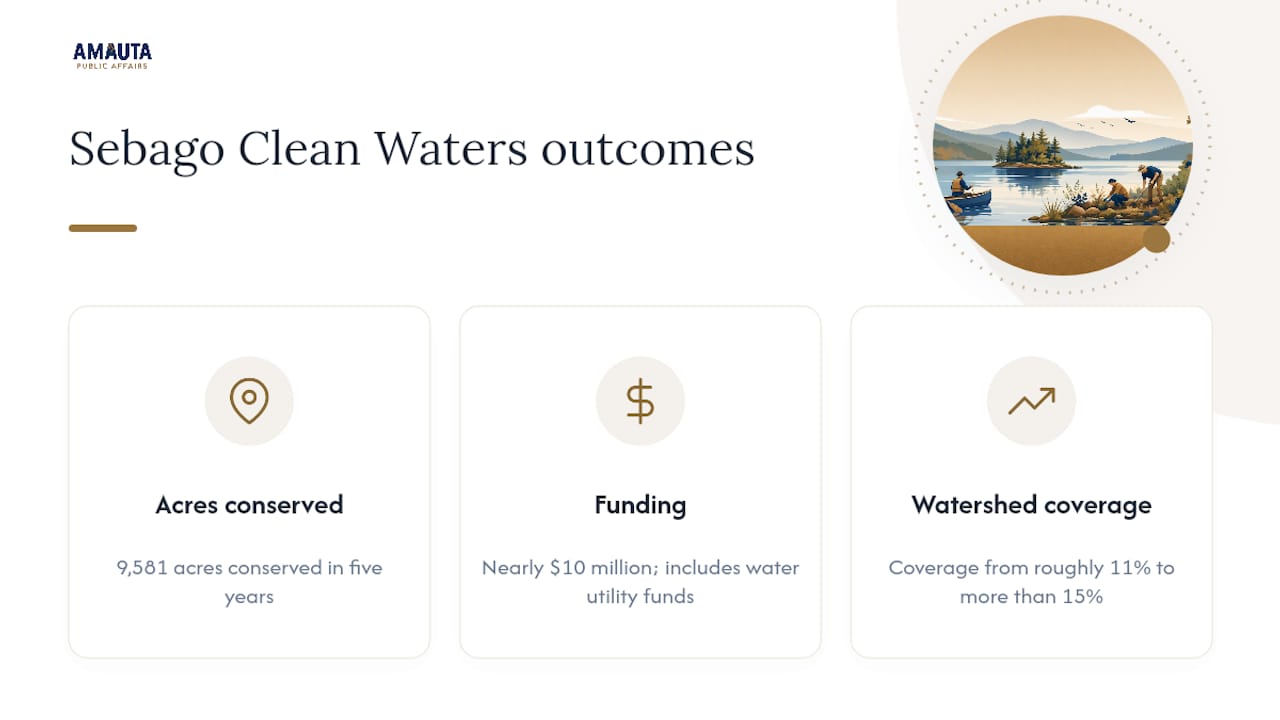
Sebago Clean Waters (2017–2022): 9,581 acres conserved, nearly $10 million raised, watershed protection increased from roughly 11% to more than 15%
Chesapeake Bay Program (1983–present): multi-state, multi-agency restoration partnership that reduced nitrogen and phosphorus loads and restored thousands of acres of wetlands
Comprehensive Everglades Restoration Plan (CERP) (2000–present): the largest ecosystem restoration project in U.S. history, authorized at $10.9 billion across more than 60 projects
Juristac / Protect Juristac (2020–2022): multi-stakeholder coalition secured a historic county ballot victory protecting sacred Amah Mutsun tribal land from mining
Alianza Ceibo (Ecuador, ongoing): Indigenous-led alliance mapped hundreds of thousands of hectares, revoked 52 illegal gold concessions, and secured Free, Prior, and Informed Consent (FPIC) precedents
A Berkeley BESI analysis of state-level climate coalitions in Colorado, Illinois, and New York confirms that combining professionalized organizations with grassroots groups is a consistent predictor of legislative success. The EPA’s EJ CPS program and major media coverage of the Klamath removal provide independent verification for the cases below.
Key Takeaways
The most replicable insight across every documented coalition success is this: a single, non-negotiable goal combined with community leadership and formal governance produces outcomes that outlast the campaign itself.
Point | Details |
Center community leadership | Coalitions led by directly affected communities, including tribal nations, produce more durable and legally enforceable outcomes. |
Set one non-negotiable goal | Klamath demanded full dam removal for decades; Juristac demanded no mine. Specificity prevents the compromises that stall campaigns. |
Fund a dedicated coordinator | The most consistently underfunded role in coalition campaigns; Sebago Clean Waters and EPA EJ CPS grantees both demonstrate its value. |
Require monitoring and transparent metrics | Baseline data and public reporting, as used by the Chesapeake Bay Program and Sebago, sustain political support and donor confidence across years. |
Amautapublicaffairs | Provides coalition coordination, stakeholder engagement, and media strategy for land use and environmental campaigns with measurable KPIs. |
Table of Contents
1. The Klamath River dam removal succeeded through decades of tribal leadership
2. EPA EJ CPS grantees turned community organizing into policy wins
3. Sebago Clean Waters shows what data-driven coordination can achieve
4. The Chesapeake Bay Program demonstrates what multi-state governance can sustain
5. CERP shows the scale possible when federal and state governments align
6. Juristac shows how local resolutions can anchor a coalition’s political mandate
7. Alianza Ceibo demonstrates Indigenous-led territorial protection at scale
8. Conservation International and BTG Pactual show how private capital can scale restoration
Why centering community and Indigenous leadership produces more durable wins
Amautapublicaffairs builds the campaign infrastructure coalitions need
1. The Klamath River dam removal succeeded through decades of tribal leadership
Who led it: Yurok, Karuk, and Klamath Tribes, alongside Friends of the River, American Rivers, and state and federal agency partners.
Core tactics: Sustained litigation, federal negotiation (the Klamath Hydroelectric Settlement Agreement), tribal sovereignty arguments, and a coordinated public narrative campaign spanning more than two decades.
Timeline and outcomes: Four dams were removed between 2023 and 2024, completing the largest dam removal in U.S. history. Within days of the final removal, thousands of salmon were observed returning upstream. By 2025, natural Chinook hatchings were recorded for the first time in roughly a century in restored river sections. Full dismantling costs were reported at approximately $500 million.
What made it work: Tribal nations held both the moral authority and the legal standing to drive federal negotiations. The coalition never diluted its core demand: full dam removal, not mitigation. That clarity prevented the kind of compromise that stalls other campaigns for decades.
2. EPA EJ CPS grantees turned community organizing into policy wins
Who led it: Community-based organizations including Pacoima Beautiful (Los Angeles), Make the Road by Walking (New York), and the Indochinese Cultural and Service Center, funded through the EPA’s Environmental Justice Collaborative Problem-Solving program.
Core tactics: The program’s seven-element model combines community needs assessment, coalition building, technical assistance, and formal stakeholder engagement. Grantees received $100,000 cooperative agreements to convene local coalitions and negotiate with agencies and industry.
Outcomes: Pacoima Beautiful secured air quality monitoring commitments and land-use policy changes in a heavily industrialized San Fernando Valley neighborhood. Make the Road by Walking organized immigrant communities in Queens around environmental health, winning agency responsiveness on brownfield remediation. The program awarded 30 cooperative agreements in its first year alone.
Replicable lesson: The EJ CPS model works because it funds a dedicated coordinator role, which is the single most common structural gap in under-resourced community coalitions.
3. Sebago Clean Waters shows what data-driven coordination can achieve
Who led it: A coalition of conservation organizations, land trusts, and municipal water utilities in Maine’s Sebago Lake watershed, coordinated under a formal governance structure.
Core tactics: Data-driven land prioritization, new funding mechanisms (including water utility contributions), formal Working Principles governing coalition roles, and coordinated outreach to willing sellers.
Timeline and outcomes: Over five years, the coalition conserved 9,581 acres and raised nearly $10 million, increasing protected watershed coverage from roughly 11% to more than 15%. The governance document reduced friction between organizations of different sizes and prevented mission creep.
What stands out: The coalition’s use of a formal Memorandum of Understanding from day one is a model worth replicating. Most coalitions draft governance documents after conflict arises. Sebago did it before.
4. The Chesapeake Bay Program demonstrates what multi-state governance can sustain
Who led it: EPA, six states (Maryland, Virginia, Pennsylvania, Delaware, New York, West Virginia), the District of Columbia, and more than 30 partner organizations.
Core tactics: Binding pollution reduction targets, watershed-wide monitoring, adaptive management, and regular public reporting through the Chesapeake Bay Program’s accountability framework.
Outcomes: Decades of coordinated effort have reduced nitrogen and phosphorus loads, restored thousands of acres of wetlands and underwater grasses, and produced measurable improvements in dissolved oxygen levels. The program’s longevity, now past four decades, reflects a governance model that survived multiple administrations and funding cycles.
Why it matters for practitioners: The Chesapeake Bay Program is the clearest U.S. example of how formal intergovernmental structure, combined with transparent metrics, can sustain a coalition past the initial political window.
5. CERP shows the scale possible when federal and state governments align
Who led it: The U.S. Army Corps of Engineers and the South Florida Water Management District, with significant input from tribal nations, environmental NGOs, and agricultural stakeholders.
Core tactics: Federal authorization through the Water Resources Development Act of 2000, multi-decade phased implementation, and a science-based adaptive management framework.
Outcomes: Authorized at $10.9 billion across more than 60 individual projects, CERP remains the largest ecosystem restoration initiative in U.S. history. Progress has been uneven, but completed projects have restored water flow to key Everglades systems and improved habitat for threatened species.
Honest caveat: CERP also illustrates the risk of large, multi-stakeholder coalitions: slow implementation, competing agricultural and urban water interests, and funding gaps have delayed several projects. The lesson is that scale requires not just authorization but sustained political will and dedicated project management.
6. Juristac shows how local resolutions can anchor a coalition’s political mandate
Who led it: Amah Mutsun Tribal Band, Green Foothills, and a coalition of local environmental and Indigenous rights organizations in Santa Clara County, California.
Core tactics: The coalition secured formal resolutions from multiple city councils early in the campaign, building a political record that made county approval of a mining project untenable. Ballot initiative strategy, media engagement, and tribal cultural heritage arguments reinforced the legal and political case.
Outcomes: In 2022, Santa Clara County voters passed Measure B, blocking a proposed sand and gravel mine on sacred Amah Mutsun land. The victory is cited as a model for using local elected-official resolutions to create political mandates that developers cannot easily override.
Pro tip embedded here: Securing city council resolutions before a county vote is not just symbolic. It creates a documented political record that strengthens appeals and signals to decision-makers that opposition is organized and durable.
7. Alianza Ceibo demonstrates Indigenous-led territorial protection at scale
Who led it: Four Indigenous nations in the Ecuadorian Amazon (A’i Cofán, Siekopai, Siona, and Waorani), coordinated through the Alianza Ceibo alliance.
Core tactics: Community-led territorial mapping, legal action to revoke illegal concessions, installation of community infrastructure (121 solar systems, 1,164 rainwater systems), and monitoring programs that generated evidence for legal proceedings.

Outcomes: The alliance mapped hundreds of thousands of hectares, secured the revocation of 52 illegal gold mining concessions, and established FPIC precedents that have influenced territorial protection law across the region. Infrastructure improvements benefited 6,182 people directly.
Why this belongs in a U.S. practitioner’s toolkit: The FPIC framework Alianza Ceibo helped establish is directly applicable to U.S. tribal consultation requirements. The mapping-to-litigation pipeline they built is a replicable model for any coalition defending a specific territory.
8. Conservation International and BTG Pactual show how private capital can scale restoration
Who led it: Conservation International partnered with BTG Pactual Timberland Investment Group (TIG) in Brazil’s Cerrado biome.
Core tactics: Blending commercial timber returns with native vegetation restoration, structuring the investment to attract institutional capital, and using Conservation International’s technical expertise to design and monitor restoration activities.
Outcomes: The partnership restored tens of thousands of hectares and demonstrated that conservation objectives and investor returns can coexist in a single fund structure. The model attracted large institutional capital and has been cited as a template for scaling private restoration finance.
Applicability: For U.S. coalitions working on conservation easements or watershed restoration, this model suggests a pathway to institutional investment that does not depend solely on public grants or philanthropic funding.
What recurring success factors show up across these cases
Across all eight cases, six factors appear consistently enough to treat as prerequisites rather than advantages.
1. A single, non-negotiable goal. The Klamath coalition demanded full dam removal for decades and refused to accept mitigation. Juristac demanded no mine, not a smaller mine. Coalitions that negotiate their core objective before the campaign ends tend to lose it.
2. Indigenous or community leadership at the center. The Klamath, Juristac, Alianza Ceibo, and EPA EJ CPS cases all placed directly affected communities in decision-making roles, not advisory ones. Research on community involvement in policy processes confirms this increases long-term effectiveness and durability of outcomes.
3. Formal governance from day one. Sebago Clean Waters adopted Working Principles before the coalition scaled. This reduced friction between large and small organizations and prevented mission creep. A Memorandum of Understanding is not bureaucratic overhead; it is the document that keeps a coalition intact when funding gets tight.
4. Diversified funding. Sebago combined water utility contributions, conservation grants, and state funds. CERP blends federal and state appropriations. Coalitions dependent on a single funder are one budget cycle away from collapse.
5. Coordinated legal, political, and media pressure. The Berkeley BESI analysis of Colorado, Illinois, and New York climate coalitions found that professionalized advocacy organizations and grassroots groups achieve more together than either does alone, precisely because they can apply pressure across multiple levers simultaneously.
6. Robust monitoring and transparent metrics. The Chesapeake Bay Program’s public reporting framework, Alianza Ceibo’s territorial mapping, and Sebago’s land-protection tracking all created accountability structures that sustained political support and donor confidence across years.
Common challenges and how successful coalitions handled them: mission creep was mitigated by governance documents; staff turnover was addressed by funding dedicated coordinator roles; funding gaps were managed by diversifying revenue streams before the first grant cycle ended.
How to choose tactics that fit your coalition’s goal
The right tactic mix depends on two variables: where decision-making power sits, and what kind of pressure that decision-maker responds to. A useful framework:
Define a single, measurable objective. Not “protect the watershed” but “conserve 10,000 acres of the Sebago Lake watershed by 2027.” Specificity makes monitoring possible and keeps the coalition aligned.
Map stakeholders and power levers. Identify who holds the decision (agency, legislature, corporate board, county voters) and what influences them (legal liability, investor pressure, electoral risk, public narrative).
Match tactics to levers. Projects dependent on institutional capital respond to investor engagement campaigns. Land-use decisions respond to local council resolutions and ballot initiatives. Regulatory permits respond to public comment mobilization and litigation.
Set governance before you recruit. Draft a one-page Working Principles document or MOU before inviting partner organizations. It signals seriousness and prevents later disputes over credit and decision authority.
Fund a dedicated coordinator. This is the most consistently underfunded role in coalition campaigns. The coordinator manages communication, tracks milestones, and prevents the coalition from fragmenting between meetings.
Align communications across all partners. A single message framework, agreed in writing, prevents partners from contradicting each other in media coverage. See the environmental messaging strategies checklist for a practical template.
Build in a legal review checkpoint. Before escalating tactics, confirm that planned actions (ballot initiatives, litigation, investor letters) are legally sound and do not expose partner organizations to liability.
Design a monitoring plan with baseline data. Define what “success” looks like in measurable terms before the campaign launches, not after. Chesapeake Bay and Sebago both had baseline metrics from day one.
Set escalation triggers. Agree in advance on what conditions will prompt the coalition to escalate tactics (e.g., if a permit is approved despite public comment, trigger litigation).
Pro Tip: Embed the Precautionary Principle in your coalition’s mission statement. It shifts the burden of proof toward the developer or agency, strengthens legal arguments, and frames your coalition’s position as scientifically grounded rather than merely oppositional.
Pro Tip: Secure formal resolutions from local city councils before a county or state decision point. As the Juristac campaign demonstrated, a documented political record at the municipal level creates a mandate that is difficult for higher-level decision-makers to ignore.
For stakeholder communication strategies and land-use communication planning, AMAUTA’s published resources offer practitioner-level guidance on both.
How Amautapublicaffairs operationalizes coalition campaigns
The cases above share a common operational gap: most coalitions have the passion and the goal, but lack the campaign infrastructure to execute across all pressure levers simultaneously. Here is how a consulting engagement translates those lessons into a structured campaign.
Illustrative campaign scenario: A conservation coalition seeks to protect a 5,000-acre watershed from a proposed industrial development. The coalition includes a tribal nation, two land trusts, a municipal water utility, and a regional environmental NGO.
Three-phase campaign timeline:
Organize (months 1–3): Stakeholder mapping, governance document drafting, coordinator role funded, baseline data collected, initial media narrative developed. KPIs: MOU signed, five partner organizations committed, baseline acreage and water quality metrics documented.
Escalate (months 4–8): City council resolution campaign, public comment mobilization, investor outreach (if the developer has institutional backers), earned media placements, and legal review of permit application. KPIs: three council resolutions secured, 500+ public comments submitted, two media placements in regional outlets.
Secure outcome (months 9–12): Negotiate conservation easement or permit denial, finalize funder commitments, establish long-term monitoring protocol. KPIs: easement recorded or permit denied, $2 million in conservation funding committed, monitoring framework operational.
Services Amautapublicaffairs would provide across this timeline: community engagement and stakeholder mapping, coalition coordination and governance support, media relations and earned media strategy, digital advocacy and public comment campaigns, funder introductions and grant narrative support, and local elected-official outreach.
Pro Tip: Build a real-time metrics dashboard from month one. Track public comment numbers, media mentions, council resolutions, and funder conversations weekly. If a KPI lags by 30%, adjust the tactic before the campaign window closes, not after.
Why centering community and Indigenous leadership produces more durable wins
The evidence across these cases points to a conclusion that practitioners sometimes resist because it complicates governance: coalitions led by directly affected communities, particularly Indigenous nations, tend to produce more durable, legally enforceable outcomes than those led by outside advocacy organizations.
The reasons are structural, not sentimental. Local and Indigenous communities hold granular knowledge of the land, the regulatory history, and the social dynamics that outside organizations cannot replicate quickly. They carry moral authority that shifts public narrative and judicial framing. And they have the strongest long-term incentive to monitor and enforce outcomes after the campaign ends, which is precisely when most coalitions dissolve.
The Klamath coalition succeeded in part because tribal nations held federal treaty rights that gave them legal standing no NGO could claim. Alianza Ceibo’s mapping and monitoring work generated the evidentiary record that made concession revocations legally sustainable. The EPA EJ CPS grantees demonstrate the same pattern at the neighborhood scale: Pacoima Beautiful and Make the Road by Walking achieved policy changes that outside advocates had sought for years, because they brought community legitimacy to the negotiating table.
The practical implication is not that outside organizations should step back. It is that governance structures should place community and Indigenous partners in decision-making roles, with veto power over core strategic choices, from the first meeting. Coalitions that treat affected communities as stakeholders to be consulted rather than leaders to be followed tend to win smaller and lose faster.
Amautapublicaffairs builds the campaign infrastructure coalitions need
Environmental coalitions with clear goals and committed partners often stall at the same point: translating strategy into coordinated, multi-channel execution. Amautapublicaffairs fills that gap with a campaign-style approach that covers the full operational stack, from stakeholder mapping and governance design to media strategy and digital advocacy.
For organizations working on land use, watershed protection, or energy infrastructure, Amautapublicaffairs offers:
Coalition coordination: convening stakeholders, drafting governance documents, and managing the coordinator function that keeps campaigns on track
Stakeholder engagement and community outreach: structured engagement programs that build public support and generate the public comment volume that agencies and elected officials cannot ignore
Media strategy and digital advocacy: earned media campaigns, message framing, and digital mobilization tied to specific campaign milestones
The firm’s environmental consulting services are structured around measurable campaign outcomes, not retainer hours. For coalitions focused on land conservation or permitting, the land management practice offers specialized support. Request a scoping call to discuss your coalition’s goal, timeline, and the specific pressure levers your campaign needs to activate.
Primary sources and further reading
These are the primary sources used in this article. Each offers direct access to program documentation, case-study data, and campaign records for practitioners who need citable evidence.
How to build winning climate coalitions (BESI / Berkeley): academic analysis of state-level coalition composition in Colorado, Illinois, and New York
How the Klamath Dams Came Down (ICT News): detailed account of the tribal-led coalition, negotiation history, and dam removal process
Klamath salmon recovery (The Story Exchange): ecological outcomes and natural Chinook hatching data within 18 months of removal
Sebago Clean Waters case profile (Wildlands & Woodlands): 9,581 acres conserved, nearly $10 million raised, governance model documentation
Alianza Ceibo case study (Equator Initiative / UNDP): Indigenous-led territorial mapping, concession revocations, and FPIC precedents
Conservation International and BTG Pactual in the Cerrado: private-capital restoration finance model and institutional investment outcomes
Sierra Club top environmental victories: verified campaign outcomes and timelines for national-scale advocacy wins
Historic victory at Juristac (Green Foothills): local resolution strategy and ballot initiative outcome for the Amah Mutsun coalition
Community involvement in policy development (UNFCCC): evidence on integrating grassroots justice organizations into formal policy processes
Sources
Recommended
Comments