
Successful Habitat Preservation Campaigns: A U.S. Playbook
Three U.S. campaigns stand out as the clearest examples of successful habitat preservation campaigns practitioners can model today: the Protect Juristac/Sargent Ranch effort in California (Peninsula Open Space Trust, Green Foothills, and the Amah Mutsun Tribal Band), the Okefenokee/Trail Ridge campaign in Georgia (The Conservation Fund, Southern Environmental Law Center, and the Okefenokee Protection Alliance), and a repeatable nonprofit land-purchase pattern used by land trusts nationwide. Each combined broad coalition pressure, early coordination with the U.S. Fish and Wildlife Service (USFWS) and U.S. Environmental Protection Agency (EPA), and a concrete financial or regulatory exit — land purchase, mineral-rights acquisition, or permit denial — that made the win durable. AMAUTA Public Affairs has supported campaigns using the same architecture.
Three repeatable success factors run through every documented win:
Coalition breadth: Cross-sector coalitions (tribal nations, faith groups, civil rights organizations, local businesses) expand political reach and change elected officials’ calculus in ways that science-only advocacy cannot.
Early agency engagement: Coordinating with EPA and USFWS before formal comment windows open surfaces concerns early, shortens opposition windows, and reduces permitting risk.
A clear endpoint: Every campaign that won had a defined exit — a land purchase, a binding conservation easement, or a permit denial — tied to a fundraising or acquisition milestone.
Key Takeaways
Coalition breadth, early agency coordination, and a defined financial or regulatory endpoint are the three factors that separate habitat-protection campaigns that win from those that generate noise without outcomes.
Point | Details |
Coalition breadth wins | Cross-sector coalitions (tribal, faith, business) expand political reach beyond what conservation groups achieve alone. |
Early agency engagement | Coordinating with EPA and USFWS before formal comment windows reduces permitting risk and shortens opposition windows. |
Document every metric | Public comment counts, petition signatures, and elected resolutions are the evidence base regulators and funders require. |
NEPA timing is fixed | The 30/60/30-day comment windows under NEPA are non-negotiable; campaigns that miss them lose their primary formal leverage. |
Amautapublicaffairs | Provides community engagement, permitting coordination, media relations, and coalition strategy for habitat-protection campaigns across the U.S. |
Table of Contents
What do successful habitat preservation campaigns look like in practice?
Case 1: Protect Juristac / Sargent Ranch
Goal: Block an open-pit aggregate mine on sacred Amah Mutsun land in Santa Clara County, California.
Timeline: Approximately four years of sustained organizing, culminating in Peninsula Open Space Trust’s purchase of key parcels.
Tactics used:
Coalition formation across Green Foothills, the Amah Mutsun Tribal Band, environmental groups, and local elected officials
More than 10,000 public comments submitted during the Draft Environmental Impact Report (DEIR) period
Resolutions of opposition from multiple city councils
Targeted petition drives and earned media to sustain public pressure between formal comment windows
Outcome: POST acquired the critical parcels; the mining proposal was abandoned.
Case 2: Okefenokee / Trail Ridge
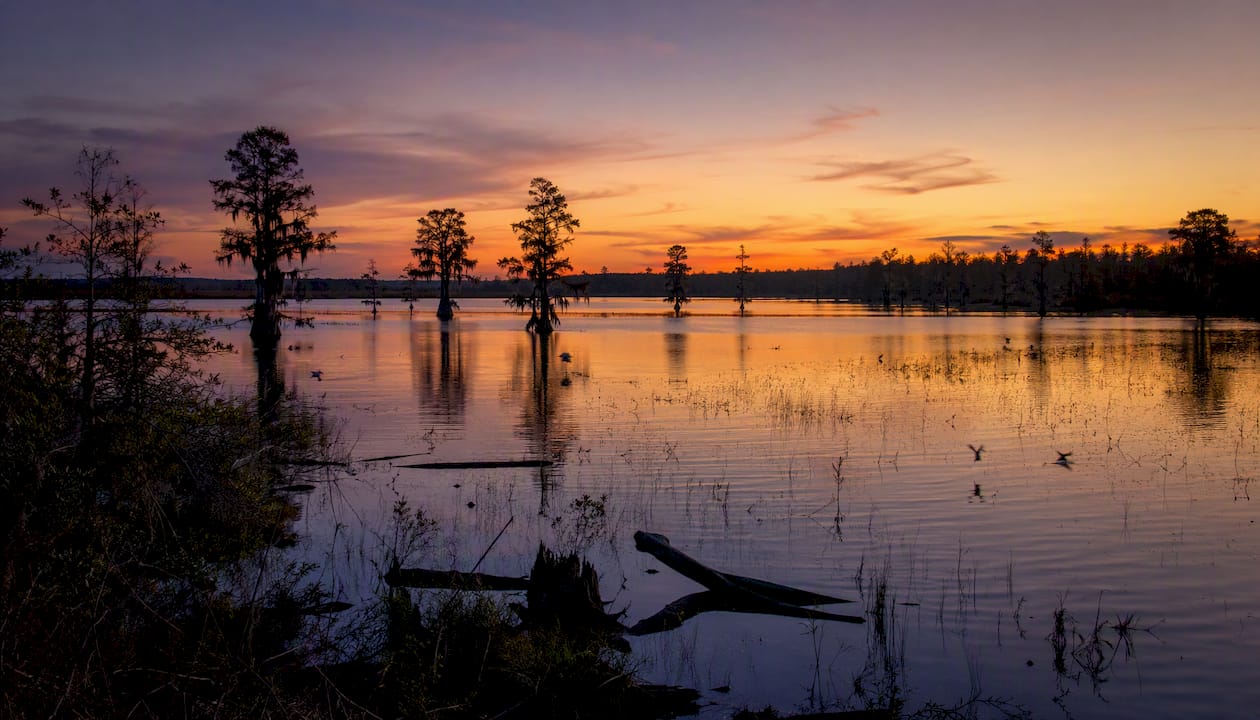
Goal: Prevent a titanium mine adjacent to the Okefenokee National Wildlife Refuge in Georgia.
Timeline: Multi-year campaign, with The Conservation Fund’s purchase closing the immediate threat.
Tactics used:
Coalition of 30-plus organizations, including SELC and the Okefenokee Protection Alliance
More than 100,000 public comments submitted to state agencies; over 44,000 to federal processes
Public hearing attendance in the thousands
Coordinated fundraising culminating in The Conservation Fund’s acquisition of Trail Ridge and mineral rights, removing the mining threat
Outcome: Land and mineral rights purchased; immediate mining threat eliminated.
Case 3: Nonprofit land-purchase pattern
Goal: Acquire a threatened parcel before a development application advances.
Tactics used:
Municipal resolutions passed early to signal political will
Targeted local outreach to adjacent landowners and community anchor institutions
Rapid donor solicitation tied to a specific acquisition milestone or deadline
Conservation easement or fee-simple purchase closes the campaign
Pro Tip: Tie every donor ask to a concrete milestone — “We need $X by [date] to close escrow” converts far better than a general conservation appeal. Funders respond to urgency with a defined exit.
Campaign | Primary tactic | Key metric | Outcome |
Protect Juristac | Coalition + DEIR comments | 10,000+ public comments | POST land purchase; mine abandoned |
Okefenokee/Trail Ridge | Coalition + mass comments + fundraising | 100,000+ comments; ~$60M acquisition | Land/mineral rights purchased |
Nonprofit land-purchase | Municipal resolutions + donor sprint | Acquisition milestone met | Conservation easement or fee-simple title |
What patterns do winning campaigns share?
Corridor conservation research makes the point plainly: science defines the problem, but human-dimensions work — local storytelling, media, and elected-official engagement — drives the policy outcome. A 70-kilometer pronghorn migration corridor earned federal protection not because the biology was compelling (it was) but because partnership-building and broad outreach made political inaction untenable.
The replicable moves across every documented win:
Build cross-sector coalitions. Faith congregations, civil rights groups, and local businesses add political weight that conservation organizations alone cannot supply. The Okefenokee coalition grew to 30-plus groups precisely because organizers recruited beyond the usual environmental base.
Engage elected officials early and formally. Council resolutions and formal statements of opposition create a political record that regulators cannot ignore. Secure these before the formal comment window opens.
Coordinate with permitting agencies before the clock starts. The EPA’s public participation guidance is explicit: early coordination surfaces concerns before they become formal objections, reducing permitting risk for all parties.
Design multi-channel outreach. The EPA’s capacity-building framework recommends plain-language materials, translated resources, and sustained feedback loops — not a single public meeting.
Document everything. Public comment counts, petition signatures with geography, and elected resolutions are the currency regulators and funders use to assess campaign credibility.
Pro Tip: Schedule your first agency check-in six to twelve months before any formal application. Frame it as a listening session, not a negotiation. Agencies remember who came early.
How do you build the operational playbook?
Effective campaigns run five parallel workstreams. Stakeholder communication strategies should be mapped before any public-facing activity begins.
Tactical buckets:
Stakeholder mapping: Identify allies, neutrals, and opponents; assign relationship owners; set a 30-day contact cadence.
Community outreach: Door-to-door canvassing, translated materials, focus groups in affected neighborhoods, and open houses aligned to EPA’s recommended multi-format model.
Digital advocacy: Petition platforms (Change.org, Care2, or a hosted form), targeted social advertising to amplify local testimony, and email list management via a CRM.
Earned media: Press releases tied to comment deadlines, a press kit with fact sheet and spokesperson bios, and proactive pitching to local beats covering land use.
Political outreach: Council briefing packets, one-page project briefs for staff, and a resolution template ready for a sympathetic council member to introduce.
Templates to have ready:
Meeting agenda for elected-official briefings (15 minutes: context, ask, resolution language)
Petition language (one sentence stating the threat, one sentence stating the ask, signature field)
One-paragraph developer compromise offer for negotiation scenarios (see developer environmental compromises)
Op-ed outline: hook (personal stake), problem (specific threat), solution (specific ask), call to readers
How should you plan the timeline and budget?
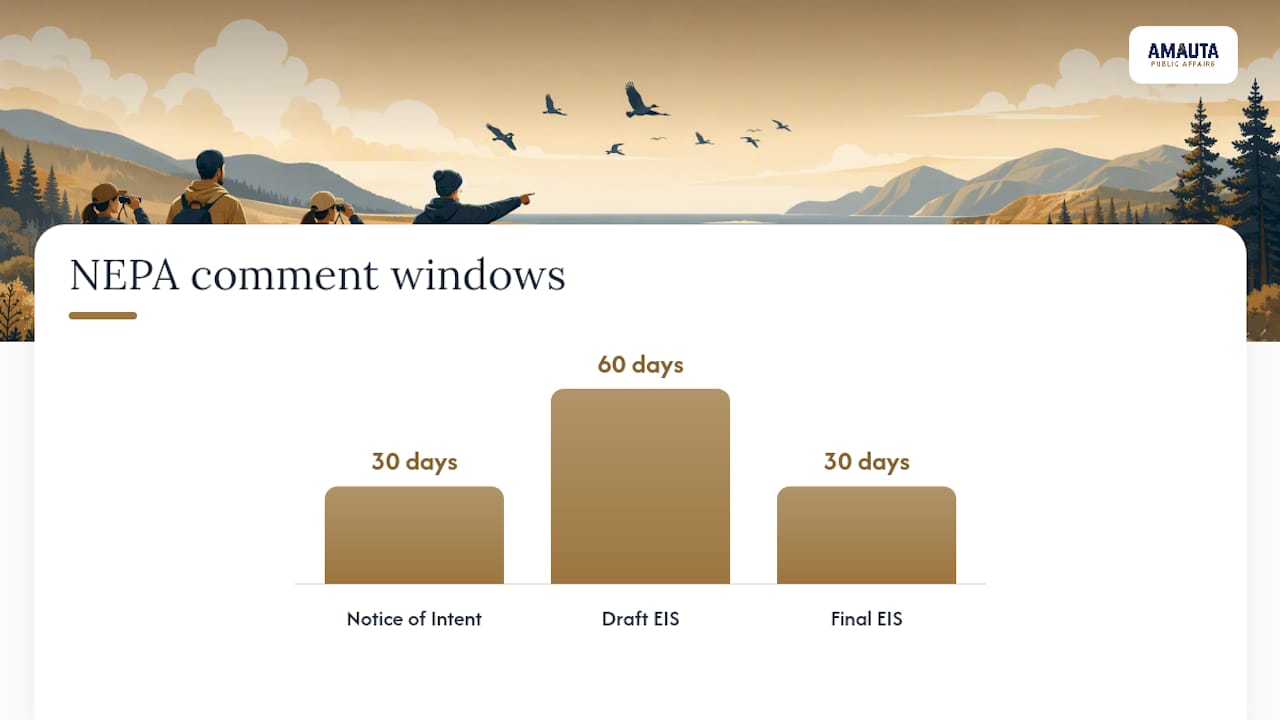
The USFWS HCP Handbook outlines NEPA notice-and-comment periods: 30 days for a Notice of Intent, 60 days for a Draft EIS, and 30 days for a Final EIS. Campaigns that miss these windows lose their most powerful formal leverage point.
Timeline milestones:
Phase | Timing | Key activities |
Pre-application outreach | Months 6–12 before filing | Stakeholder map, agency check-ins, coalition formation |
Formal comment windows | 30/60/30 days per NEPA tier | Coordinated comment drives, press surges, elected statements |
Peak advocacy | Concurrent with DEIR/DEIS | Rallies, petition pushes, donor solicitation |
Contingency period | Post-comment through decision | Legal review, acquisition negotiations, easement drafting |
Budget line items to include in every proposal:
Community outreach staffing (coordinator plus translators)
Translation and accessibility (written materials, interpretation at meetings)
Digital ad buys to amplify local testimony during comment windows
Petition platform fees and CRM licensing
Legal and technical review of DEIR/DEIS documents
Donor fundraising costs (events, direct mail, digital)
Acquisition or easement seed funds (even a small escrow deposit signals seriousness to sellers)
Marginal dollars return the most when directed at paid digital during comment windows — amplifying authentic local testimony reaches regulators and press simultaneously.
What metrics prove your campaign is working?
Credibility with regulators and funders rests on documented, verifiable outputs. The Okefenokee campaign’s six-figure comment volume was not incidental — it was the evidence base that made The Conservation Fund’s acquisition case to major donors.
Metric | Collection method | How it’s used |
Public comment count | Agency docket + internal tracker | Regulator briefings, funder reports |
Petition signatures (with geography) | Platform export | Media pitches, elected-official briefings |
Meeting attendance | Timestamped sign-in sheets | Permitting record, press releases |
Elected resolutions passed | Council minutes | Regulatory record, donor confidence |
Earned media reach | Clip tracking (Meltwater, Google Alerts) | Funder reports, coalition recruitment |
Dollars pledged/funded | Donor CRM | Acquisition feasibility, board reporting |
Documentation checklist:
Timestamped sign-in sheets from every public meeting
Archived screenshots of petition totals at key milestones
Scanned letters from elected officials on official letterhead
Copies of all agency correspondence, filed and indexed for FOIA purposes
A central shared repository (Google Drive or SharePoint) with version control
The USFWS Strategic Habitat Conservation policy requires explicit biological objectives and measurable outcomes for landscape-scale conservation partnerships — your documentation system should mirror that standard, because funders and agency partners increasingly expect it.
Ready-to-use outreach templates and stakeholder questions
Email to elected official (staff-level):
Subject: Request for Council Resolution — [Site Name] Habitat Protection Dear [Name], our coalition is requesting a formal resolution of support for habitat protection at [Site Name]. I’d welcome 15 minutes to brief you or your staff on the proposal. I can provide a one-page summary and draft resolution language in advance. Please let me know your availability.
Door-to-door and focus-group questions:
What do you value most about this area — what would you miss if it changed?
What specific risks concern you about the proposed project?
What mitigation or compromise, if any, would feel acceptable to you?
Would you sign a petition or attend a public meeting? What would make that easier?
Petition language template:
We, the undersigned residents and stakeholders, urge [Agency/Council] to deny the proposed [Project Name] and protect [Site Name]'s habitat, water quality, and cultural resources for future generations.
Press release skeleton: Headline (outcome-first), dateline, lead paragraph (who/what/where/why), quote from coalition spokesperson, quote from elected official or tribal representative, boilerplate on each coalition member, contact information.
Donor solicitation outline: Specific threat + deadline, acquisition target and price, amount raised to date, gap to close, what closing the gap achieves, specific ask with a giving link.
Pro Tip: Translate all materials into the primary languages spoken in the affected community before the first public meeting — not after. Late translation signals that the process was designed without those communities in mind, and regulators notice.
What practitioners consistently underestimate
The campaigns that stall are rarely under-resourced on science. They’re under-resourced on political timeline management, translation logistics, and donor speed.
Elected-official endorsements take longer to secure than most campaign managers budget for. A council resolution that looks like a two-week ask often requires six weeks of staff briefings, public comment periods, and scheduling. Build that into your timeline from day one, not after the first deadline passes.
Translation is not a line item to trim. The EPA’s capacity-building guidance documents real examples of graphic novels, videos, and translated fact sheets used in EPA-supported outreach — formats that reach communities a standard English-language newsletter never will. Campaigns that skip this step consistently undercount their own public support.
The most underrated tactic in any permitting campaign is coordinated, short-form testimony from trusted local messengers — a pastor, a school principal, a small business owner — delivered at the agency’s internal review meeting, not just the formal public hearing. Regulators weigh the messenger as much as the message. Timing that testimony to the agency’s own decision calendar, rather than to the campaign’s press calendar, is what separates campaigns that influence outcomes from those that generate coverage.
How Amautapublicaffairs supports your habitat-protection campaign
Winning a habitat-protection campaign requires more than a petition and a press release. It requires a coordinated public affairs operation — stakeholder mapping, permitting-stage outreach, coalition management, media relations, and a fundraising strategy tied to a concrete acquisition or regulatory milestone.
Amautapublicaffairs brings a campaign-management approach to every engagement: granular community landscape assessments, multi-channel outreach plans built to EPA participation standards, and strategic messaging refined against real-time feedback. Services relevant to habitat campaigns include community engagement planning, permitting coordination support, media relations, digital advocacy infrastructure, coalition building, and donor fundraising strategy. Whether you are a developer seeking a durable community agreement, a nonprofit racing an acquisition deadline, or a local government navigating a contested NEPA process, the work begins with a scoping conversation. Visit the AMAUTA services page to review the full offering and request a no-obligation scoping call.
Sources
Recommended
Comments