
How Grassroots Mobilization Drives Real Community Change
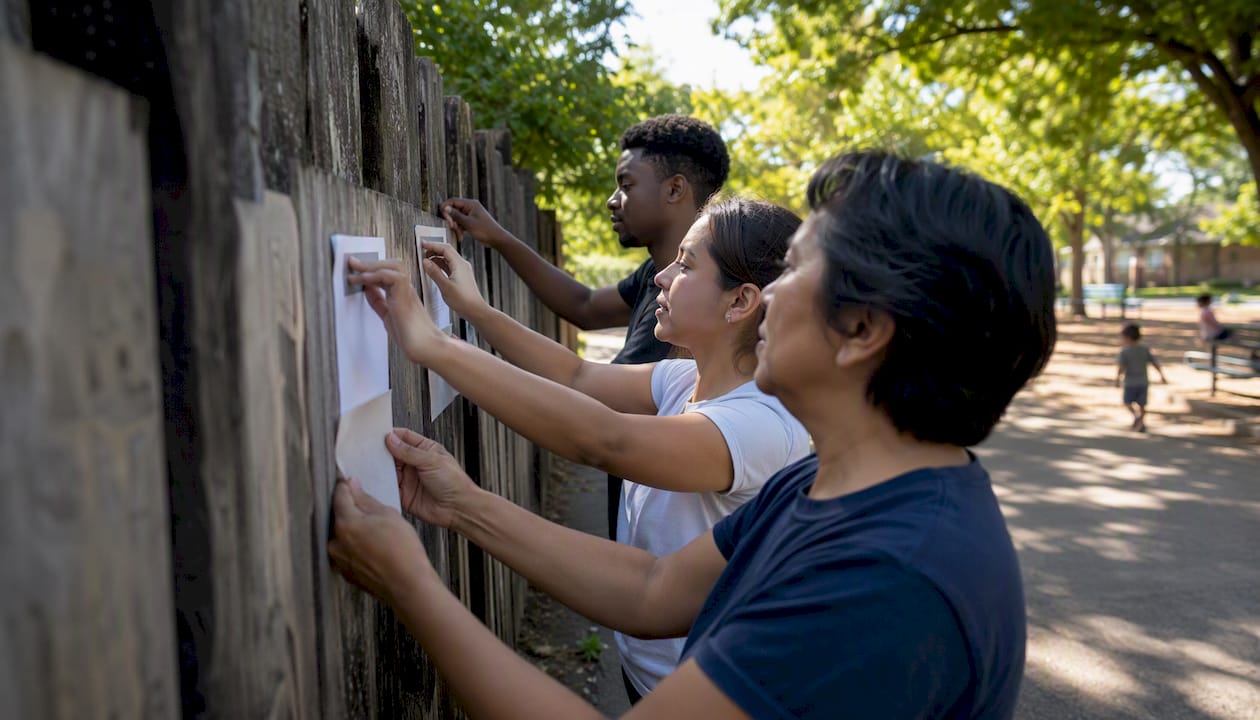
Grassroots mobilization is the engine that converts local concern into political and social power, operating through personal networks, trusted relationships, and targeted collective action to influence decisions that communities cannot change alone. According to Britannica, this form of civic action relies on narrow, personal communication channels — face-to-face contact, phone outreach, and targeted email — rather than broadcast media, precisely because proximity and trust are what move people to act. The distinction between mobilizing (aggregating existing preferences quickly) and organizing (building durable leadership capacity) matters enormously for how campaigns are designed and sustained.
The practical effects of community mobilization fall into three categories:
Power-building: Activating local networks creates a constituency with credible standing before decisionmakers.
Policy influence: Constituent pressure, testimony, and coalition action shift legislative and regulatory outcomes.
Durable implementation: Sustained engagement after a win protects policy gains through administrative follow-through.
Key Takeaways
Grassroots mobilization works because it converts trusted local relationships into organized political pressure that decisionmakers cannot credibly ignore, and sustains that pressure through implementation.
Point | Details |
Bottom-up architecture | Credibility comes from community rootedness; outside-led campaigns lose legitimacy quickly. |
Six core mechanisms | Personal contact, trusted messengers, framing, targeted turnout, coalition leverage, and institutional embedding drive change. |
Mobilize vs. organize | Mobilizing wins short-term asks; organizing builds the durable capacity needed for long-horizon policy goals. |
Realistic timelines | Local decisions move in 3–12 months; state-level legislative change typically requires 6–24 months or longer. |
Amautapublicaffairs | Provides campaign-style community engagement and stakeholder alignment for land-use and infrastructure projects. |
Table of Contents
What makes grassroots mobilization different from other civic action?
Britannica defines grassroots mobilization as a bottom-up form of civic action in which ordinary people, rather than institutional elites, initiate and sustain collective effort. The defining feature is not the cause but the architecture: decisions flow upward from community members, not downward from party headquarters or corporate sponsors.
Genuine grassroots mobilization shares a recognizable set of characteristics:
Bottom-up leadership: Organizers emerge from the affected community, not from outside institutions.
Narrow communication channels: Outreach relies on personal contact, small-group meetings, and targeted digital messages rather than mass advertising.
Social network reliance: Existing relationships — neighbors, faith communities, workplace ties — are the primary recruitment infrastructure.
Place-based legitimacy: The campaign draws credibility from its rootedness in a specific geography or community of identity.
Volunteer labor: Capacity is built through unpaid civic participation, even when professional staff coordinate it.
Coalition-building: Effective campaigns aggregate multiple community groups to broaden their base and signal wider support.
Iterative feedback: Messaging and tactics are adjusted based on what resonates with real constituents, not polling abstractions.
A useful illustration: when residents near a proposed industrial facility begin meeting in church basements, sharing concerns through neighborhood text chains, and collectively showing up at a zoning board hearing, that is grassroots mobilization in its clearest form. No national organization funded the effort. The credibility comes from the fact that the people speaking are the people most affected.
Pro Tip: Before launching any outreach, map the existing social infrastructure in the target community — faith institutions, parent-teacher associations, neighborhood associations — because those networks are faster and more trusted than any list you can build from scratch.
How does grassroots mobilization actually produce change?
The causal chain runs from local action to mobilized base to institutional pressure to policy or implementation change. Six mechanisms drive that chain.
Personal contact and relational organizing remain the most reliable conversion tool. Research on community health mobilization confirms that dedicated community-level mobilizers, working through sustained personal relationships, produce measurably higher engagement than broadcast outreach alone, as documented in a PMC study on the CORE Group Polio Project in Uttar Pradesh. The principle transfers directly to political and land-use campaigns: a neighbor asking a neighbor to attend a meeting converts at a far higher rate than a mailer.
Trusted messengers amplify reach without sacrificing credibility. When a respected local pastor, a longtime small-business owner, or a community health worker delivers a message, it carries social proof that no paid advertisement can replicate.
Framing and narrative shape how decisionmakers and the public perceive a problem. Effective campaigns do not just present facts; they connect those facts to values the audience already holds. A renewable energy project framed as local job creation lands differently than one framed as environmental compliance.
Targeted turnout converts passive sympathy into active pressure. Filling a public hearing room, delivering signed petitions, or generating a specific volume of constituent calls to a legislator’s office demonstrates organized political will in a form officials cannot ignore.
Coalition leverage multiplies credibility. When a housing advocacy group, a faith coalition, and a business association all endorse the same position, the signal to decisionmakers is that the issue crosses demographic and ideological lines.
Institutional embedding sustains gains. As Nonprofit Quarterly argues, grassroots action supplies the local knowledge and public pressure that elite actors often lack, and that knowledge must be embedded in ongoing relationships with agencies and legislators to protect implementation after a legislative win.
The mechanisms most effective at each stage:
Recruitment phase: Personal contact, trusted messengers, social network activation.
Pressure phase: Targeted turnout, public testimony, coalition endorsements, earned media.
Implementation phase: Institutional embedding, ongoing monitoring, sustained constituent relationships.
What tactics work best in a grassroots campaign?
The most effective tactical mix combines relational outreach with targeted digital amplification and coordinated coalition actions, sequenced so that relationship-building precedes public pressure. Here is a practical sequence:
Landscape and stakeholder assessment — Identify who is affected, who holds decision authority, and what existing community networks can be activated before any public action.
Door-knocking and one-on-one meetings — Build the relational foundation; these conversations surface real concerns and identify potential volunteer leaders.
Phone-banking — Scale personal contact efficiently once a core volunteer base is trained and a clear ask is defined.
Community forums and town halls — Create visible, public moments that demonstrate organized community interest and generate earned media.
Targeted email and peer-to-peer digital outreach — Reinforce in-person contact and mobilize supporters who cannot attend in person. Digital campaigns planned around organic growth principles extend reach without replacing relational work.
Public testimony — Deliver constituent voices directly into the official record at hearings, council meetings, or regulatory proceedings.
Earned media — Pitch local journalists with compelling human stories; coverage amplifies the campaign’s reach and signals public salience to decisionmakers.
Accountability tracking — Monitor how officials vote, respond to constituent contacts, and implement commitments; publish the results to sustain pressure.
Three tactic use-cases illustrate how goal shapes selection. A campaign seeking a zoning variance approval within 90 days should prioritize door-knocking in the immediate neighborhood, targeted turnout at the planning commission hearing, and a coalition letter from local business and civic groups. A statewide legislative campaign with an 18-month horizon needs phone-banking, digital peer-to-peer organizing, and sustained earned media to maintain salience across a longer arc. A public health initiative aiming to change community behavior over multiple years requires deep relational organizing, trusted-messenger recruitment, and iterative feedback loops rather than a single mobilization push.
Pro Tip: Sequence relational outreach before any public action. Volunteers recruited through personal relationships stay engaged three to four times longer than those recruited through social media ads alone, because the commitment is social, not just informational. Volunteer retention is the single most underestimated resource constraint in grassroots campaigns.
Mobilizing vs. organizing: which approach does your campaign need?
Mobilizing aggregates existing preferences for a short-term objective; organizing builds ongoing power, leadership, and institutional capacity for long-term influence. The Annual Review of Political Science draws this distinction precisely, and it has direct strategic consequences for how campaigns allocate time and money.
Dimension | Mobilizing | Organizing |
Primary aim | Activate existing supporters for a specific ask | Develop new leaders and durable community power |
Time horizon | Weeks to months | Months to years |
Cost profile | Lower upfront; concentrated spend | Higher sustained investment |
Core tactics | Phone-banking, turnout drives, petition delivery | One-on-ones, leadership training, coalition-building |
Risk | Wins can erode without follow-through | Slower to produce visible results |
Two scenarios clarify when each approach fits.
Scenario A — Mobilizing: A community coalition needs 200 residents to attend a city council vote on a proposed highway expansion in six weeks. The goal is discrete, the timeline is compressed, and the community already has latent opposition. A targeted phone-bank and digital outreach push, drawing on existing contact lists, is the right tool. Organizing infrastructure is not needed for this moment.
Scenario B — Organizing: A neighborhood group wants to reshape how the city’s planning department engages communities of color over the next three years. No single vote will accomplish that. The campaign needs to identify and train resident leaders, build relationships with sympathetic council members, and create ongoing accountability mechanisms. Mobilizing tactics alone will produce a burst of activity that dissipates; organizing builds the capacity to sustain pressure across multiple decision cycles.
Hybrid strategies work when a campaign has both an immediate deadline and a long-term goal. The New Mexico voting-rights coalitions described in the Harvard Ash Center policy brief used mobilization to pass legislation and organizing to monitor implementation — a sequencing that protected the win.
How does grassroots pressure translate into policy change?
Four practical pathways connect community mobilization to institutional outcomes.
Electoral influence is the most direct. When a grassroots campaign registers new voters, turns out a specific constituency, or makes an incumbent’s record on a local issue visible to their base, it shifts the political calculus for every subsequent vote that official takes.

Outside lobbying through constituent contacts works because legislators respond to organized constituent pressure differently than they respond to professional lobbyists. A hundred personal calls from district residents on a specific bill carries more weight than a polished briefing from a trade association, particularly in state and local races where margins are small.
Agenda-setting through media and storytelling places issues on the public agenda that decisionmakers would otherwise ignore. Effective advocacy communications translate community experience into narratives that journalists can cover and officials must respond to.
Sustained implementation monitoring is the pathway most campaigns neglect. Passing a bill or winning a permit approval is not the end of the work. As the Harvard Ash Center documents, coalitions that centered impacted communities in New Mexico secured legislative change and then maintained engagement to protect implementation, because policy gains erode when the organized pressure that created them disappears.
Tactical match-ups by pathway:
Electoral influence: Voter registration drives, targeted turnout, candidate accountability scorecards.
Outside lobbying: Phone-banking, constituent meetings with legislators, petition delivery, public testimony.
Agenda-setting: Earned media, storytelling campaigns, social media amplification, coalition press events.
Implementation monitoring: Regulatory comment submissions, agency relationship-building, ongoing reporting, public dashboards.
The Grist report on local climate activism makes the cost-effectiveness case clearly: community-based strategies can produce durable policy outcomes at relatively low cost when they invest what researchers call “equity sweat” — granular, localized engagement that helps policies survive political turnover.
How do you measure impact and plan realistic timelines?
Measurement should pair short-term engagement metrics with longer-term governance outcomes, because a campaign that only tracks attendance numbers will miss whether it is actually moving the needle on its policy goal.
Common metrics by campaign stage:
Engagement: Contacts made, event attendance, social media reach, media mentions.
Activation: Pledges collected, volunteer sign-ups, coalition endorsements secured.
Conversion: Testimonies delivered, constituent calls logged, voters contacted and turned out.
Policy outcomes: Bills introduced, committee votes, regulatory decisions, implementation steps completed.
Empowerment indicators: New community leaders identified and trained, ongoing committees formed, sustained organizational capacity built.
Realistic timelines vary significantly by goal. A community decision — a zoning variance, a local ordinance, a school board resolution — typically moves in a 3–12 month window when organized pressure is applied consistently. State-level legislative change generally requires 6–24 months or longer, depending on the political environment and the strength of opposition. Systemic change in agency practice or institutional culture can take years, which is why organizing infrastructure matters more than mobilization bursts for long-horizon goals.
Budget shapes follow a similar gradient. A volunteer-driven campaign with a clear local target can operate on minimal direct expenditure, relying on donated time and existing community networks. A targeted paid canvass for a time-sensitive campaign adds staff and materials costs but compresses the timeline. Long-term organizing infrastructure — staff, training programs, data systems, coalition coordination — requires sustained investment, but community-led approaches show that impact depends more on implementation intensity and trust than on raw spending.
Key measurement principle: Track both leading indicators (contacts, sign-ups, testimonies) and lagging indicators (votes, policy changes, implementation steps) simultaneously. A campaign that only measures activity can look successful while failing to move its actual target.
What challenges and risks should organizers anticipate?
The most common risks in grassroots campaigns are co-optation by opposing interests, misinformation spread through the same personal networks that make mobilization effective, volunteer burnout, and legal exposure from lobbying registration requirements.
On the legal side: U.S. federal and state lobbying laws impose registration and disclosure requirements on organizations that spend above certain thresholds on direct legislative advocacy. The rules vary by jurisdiction and entity type; campaigns should consult legal counsel before scaling direct lobbying activity, particularly if they operate as 501©(3) nonprofits with restrictions on political activity.
Practical risk-mitigation steps:
Transparency: Disclose funding sources and organizational affiliations publicly; opacity invites credibility attacks.
Ethical fundraising: Avoid financial relationships that create conflicts between donor interests and community interests.
Data protection: Handle volunteer and supporter contact data with basic security practices; a data breach damages trust that took months to build.
Inclusive leadership: Actively recruit leaders from the communities most affected by the issue; campaigns led by outsiders lose legitimacy quickly.
Message testing: Test framing with real community members before going public; a message that resonates with organizers may land poorly with the broader constituency.
Sustainability planning: Build volunteer pipelines and leadership succession from the start; campaigns that depend on a single charismatic leader are fragile.
Grassroots methods are politically neutral tools. As Nonprofit Quarterly notes, the same tactics that advance progressive causes can fuel local opposition movements. Any public-affairs strategy must anticipate and prepare to counter organized grassroots opposition, not just deploy grassroots tactics offensively.
Pro Tip: Burnout is the silent campaign-killer. Build in recognition rituals, clear role boundaries, and explicit rest periods for core volunteers from the first month. Campaigns that treat volunteer capacity as infinite typically lose their most committed people six weeks before the critical vote.
U.S. case studies: what grassroots campaigns have actually achieved
Three U.S. examples show the mechanisms and strategies in action, each with a measurable outcome and a transferable lesson.
New Mexico voting-rights coalition
Goal: Pass state-level voting-rights reforms, including automatic voter registration and expanded early voting access.
Tactics: A coalition of community organizations centered impacted communities — particularly communities of color — in the campaign design. Organizers built relationships with sympathetic legislators, delivered constituent testimony, and coordinated earned media to sustain public salience.
Result: The coalition secured passage of significant voting-rights legislation. Critically, as the Harvard Ash Center documents, the coalition maintained post-victory engagement to monitor implementation, protecting the legislative win against administrative erosion.
Lesson: Legislative passage is a milestone, not a finish line. Sustained organizing capacity after a win is what determines whether the policy actually changes lives.
Local climate and energy campaigns
Goal: Block fossil fuel infrastructure or secure local renewable energy commitments.
Tactics: Community coalitions combined public testimony, coalition press events, and sustained earned media with direct engagement of local planning and utility boards.
Result: The Grist analysis of local climate activism found “remarkable” gains from community-based strategies, with durable outcomes achieved at relatively low cost through intensive localized engagement.
Lesson: “Equity sweat” — granular, place-based engagement — produces policy durability that national campaigns cannot replicate from a distance.
Community-led public health mobilization
Goal: Improve health behaviors and vaccination rates in underserved communities.
Tactics: Dedicated community-level mobilizers, working through trusted social networks and sustained personal relationships, delivered health information and facilitated access.

Result: PLOS Global Public Health research confirms that community-led strategies can improve health behaviors, with impact depending on implementation intensity, trust, and stakeholder engagement rather than being universally guaranteed.
Lesson: Trust is the prerequisite. No tactic substitutes for the credibility that comes from community members speaking to community members.
Lessons across all three cases:
Center the communities most affected in campaign design and leadership.
Build relationships with decisionmakers before the critical vote, not during it.
Plan for implementation monitoring from the start, not as an afterthought.
Measure both engagement activity and policy outcomes to know whether pressure is actually moving the target.
An applied perspective on grassroots mobilization in land-use work
Grassroots mobilization is not a tactic reserved for protest movements. In land-use and infrastructure advocacy, it is often the prerequisite for project approval, community trust, and durable implementation. A developer or public agency that arrives at a planning commission hearing without organized community support is asking decisionmakers to take political risk on their behalf. A campaign-style approach to community engagement changes that equation.
A practical checklist for applying mobilization to land-use or infrastructure campaigns:
Landscape assessment: Map the community’s existing concerns, power dynamics, and social infrastructure before designing any outreach strategy.
Stakeholder mapping: Identify supporters, opponents, and persuadable voices; prioritize relationships with those who hold credibility with the deciding body.
Relational outreach: Conduct one-on-one meetings with key community leaders before any public event; surprises at public hearings are almost always avoidable.
Coalition alignment: Recruit endorsements from organizations that represent the community’s breadth — not just the most vocal supporters.
Implementation monitoring: Build a plan for sustained engagement after approval to protect project commitments and maintain community trust through construction and operation.
For project teams that need applied consulting support, stakeholder communication strategies for land-use projects offer a structured starting point for integrating these tactics into permitting and approval processes.
Community engagement that moves projects forward
Amautapublicaffairs brings a campaign-style approach to community engagement for land-use, energy, and infrastructure projects — the kind of structured, relational outreach that converts community concern into organized support before a critical hearing. Where generic public relations firms deliver press releases, Amautapublicaffairs delivers stakeholder alignment: a mapped community landscape, a coalition of credible local voices, and a messaging strategy tested against real constituent feedback.
For developers, local governments, and nonprofits navigating complex approval processes, that difference between passive information-sharing and active community mobilization is often what separates a project that advances from one that stalls. To discuss how a campaign-style engagement strategy fits your project, visit the AMAUTA services page and request a consultation.
Sources
These sources support the claims in this guide and offer deeper reading for organizers designing metrics, building arguments for decisionmakers, or training volunteer teams.
A new report shows how local climate activism leads to ‘remarkable’ gains | Grist
Why Grassroots Action Is the Most Likely Path to Systemic Change | Nonprofit Quarterly
Annual Review of Political Science — organizing vs. mobilizing (2024)
Community-led approaches and health outcomes — PLOS Global Public Health
Recommended
Comments