
Stakeholder Communication Strategies for Land Use Projects

Stakeholder communication strategies for land use are defined as deliberate, structured approaches to engaging affected parties early and consistently throughout a project’s lifecycle. Projects with early stakeholder involvement are 25% more likely to stay on schedule and within budget. That single statistic reframes engagement from a courtesy to a prerequisite. For local government officials, developers, and community leaders, the difference between a project that advances and one that stalls often comes down to how well you communicate, not how technically sound your plans are.
1. Stakeholder communication strategies for land use: start before the first public meeting
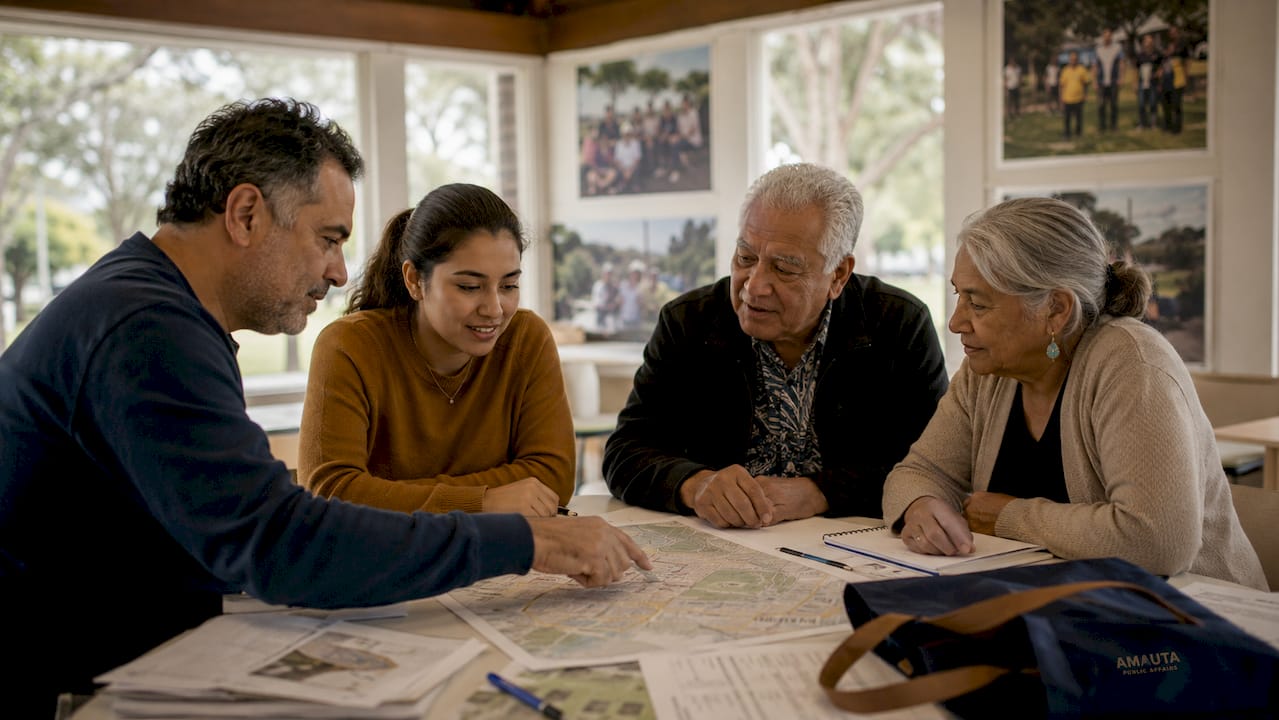
The most effective land use stakeholder engagement begins before any formal process is triggered. Experienced practitioners treat engagement as entitlement risk management, meaning you identify potential opposition and address concerns before the public hearing, not during it. This pre-project phase gives you time to map the community, understand local social dynamics, and build relationships with key voices. Waiting for a scheduled hearing to introduce your project is the single fastest way to generate organized resistance.
Early engagement also gives you better information. Communities often hold local knowledge about land use patterns, drainage issues, or neighborhood sensitivities that no technical study captures. Bringing that knowledge into your planning process produces better outcomes and builds goodwill simultaneously.
2. Proactive public information campaigns
Proactive public information campaigns rank as the most effective communication strategy in urban land readjustment, cited in 11 of 47 global studies. The reason is straightforward: when you control the information flow, you prevent the vacuum that rumors fill. Reactive public relations in land use projects creates information gaps that spread disinformation, and those gaps are far harder to close than they are to prevent.
A proactive campaign does not mean a one-time press release. It means consistent, scheduled updates across multiple channels throughout the project’s life. The goal is to make sure affected parties hear from you before they hear from someone else.
Pro Tip: Launch your public information campaign at the project initiation phase, not at the permit application stage. Communities that feel informed from day one are significantly more receptive to technical presentations later.
3. Multi-channel communication for diverse audiences
No single channel reaches every stakeholder group. Effective communication in land use requires a deliberate mix of in-person meetings, printed newsletters, digital platforms, and direct outreach to community organizations. Each channel serves a different segment: older residents may rely on mailed notices and town halls, while younger residents engage through social media and project websites.
The channel mix also signals respect. Using only digital platforms in a community with limited internet access tells residents their participation is not genuinely wanted. Matching your channels to your audience’s actual habits is a form of inclusion before any formal consultation begins.
4. Tailored messaging for each stakeholder group
Developers, local officials, environmental groups, and neighboring residents each have different concerns about the same project. A rezoning that a developer frames as economic growth may register as displacement risk to a nearby resident. Simplified, evidence-based communication is more effective in gaining stakeholder support than technical jargon, and that principle applies to message framing as much as to data presentation.
Tailored messaging does not mean telling different groups different things. It means translating the same core facts into language and priorities that resonate with each audience. A traffic impact study means something different to a city engineer than to a parent who walks their child to school two blocks from the site.
5. Inclusive consultation and structured feedback mechanisms
Inclusive consultation means creating formal channels through which all affected parties can provide input and receive a documented response. This is distinct from holding open houses where comments disappear into a black box. Structured feedback mechanisms, such as written comment periods with published responses, online input portals, and facilitated small-group sessions, give communities confidence that their participation matters.
Trust and transparency are prerequisites for collaborative outcomes in land projects. Without a visible feedback loop, even well-intentioned engagement reads as performative. When residents see their comments acknowledged and addressed, the social capital required for smooth approvals accumulates naturally.
6. Grievance mechanisms and conflict resolution processes
Every land use project generates some opposition. The question is whether that opposition becomes a delay or a dialogue. Grievance mechanisms are formal processes that allow stakeholders to raise concerns, receive a response within a defined timeframe, and escalate unresolved issues through a clear pathway. They are standard practice in infrastructure projects governed by frameworks like the International Finance Corporation’s Performance Standards.
Effective grievance handling shares three characteristics: it is accessible to all affected parties regardless of technical literacy, it is transparent about timelines and outcomes, and it is independent enough that complainants trust it will not simply rubber-stamp developer positions. Projects that build these systems early spend less time in litigation and administrative appeals later.
7. How to communicate with stakeholders using visual and spatial tools
Maps, renderings, and geospatial data visualizations help non-technical audiences understand what a project will actually look like and how it will affect their neighborhood. Used well, spatial tools function as boundary objects, meaning they create a shared reference point that different stakeholder groups can discuss without needing a common technical vocabulary. High-tech spatial tools should facilitate dialogue, not substitute for negotiated engagement.
The risk is what researchers call the tech-participation trade-off: increased reliance on geospatial tools often correlates with less meaningful ground-level stakeholder involvement. A 3D rendering shown at a public meeting without facilitated discussion is a presentation, not a conversation. The tool only works when it opens dialogue rather than closing it.
Approach | Best use case | Participation level |
Interactive map portal | Large geographic footprint projects | Self-directed, asynchronous |
Facilitated visual workshop | Neighborhood-scale land use decisions | High, synchronous dialogue |
Rendered site walkthrough | Design review with adjacent residents | Moderate, presentation-led |
GIS data dashboard | Technical review with agency staff | Low, expert-to-expert |
8. Ongoing dialogue and presence in the community
Public involvement in land planning does not end after the environmental review period closes. Projects that maintain a visible community presence throughout construction and post-approval phases build the kind of long-term trust that supports future projects. This means attending neighborhood association meetings, providing construction update notices, and making a project contact person genuinely accessible.
Many developers fail to understand local social contexts, and that gap causes avoidable controversies that delay approvals. Sustained presence is the antidote. It signals that the developer or agency views the community as a partner, not an obstacle to manage until the permit is issued.
Pro Tip: Assign a dedicated community liaison who attends local events and is reachable by phone or email. A named, accessible person builds more trust than any formal public comment process.
9. Digital advocacy and media relations as force multipliers
Media coverage shapes public perception of land use projects before most residents attend a single meeting. A well-placed news story about a project’s community benefits can shift the baseline sentiment that officials and developers walk into at a public hearing. Conversely, a critical investigative piece about a lack of transparency can mobilize opposition that takes months to address.
Digital advocacy, including project websites, email newsletters, and targeted social media, gives project teams direct control over their narrative. Pairing owned digital channels with earned media coverage through proactive media outreach tactics creates a communication ecosystem that reaches stakeholders across every information channel they use. The goal is not spin. It is making sure accurate information is as accessible as misinformation.
10. Measuring and refining communication effectiveness
Effective communication in land use is not a set-and-forget activity. Tracking attendance at public meetings, response rates to surveys, volume and sentiment of public comments, and media coverage gives project teams real-time feedback on what is working. That data should drive adjustments to channel mix, message framing, and engagement frequency.
The quality of the conversation with communities determines project outcomes more than technical merit alone. Measuring communication quality, not just quantity, means asking whether stakeholders feel heard, not just whether they showed up. Post-meeting surveys and follow-up calls to community leaders provide the granular feedback that attendance numbers cannot.
Key takeaways
The most effective stakeholder communication strategies for land use combine early engagement, proactive information campaigns, and structured feedback systems to keep projects on schedule and build lasting community trust.
Point | Details |
Start before formal processes | Pre-project engagement prevents organized opposition and surfaces local knowledge early. |
Proactive campaigns prevent rumors | Consistent updates across multiple channels close the information gaps that disinformation fills. |
Tailor messages by audience | Translate the same facts into language and priorities that resonate with each stakeholder group. |
Grievance mechanisms reduce delays | Formal, accessible complaint processes convert opposition into dialogue and reduce litigation risk. |
Measure conversation quality | Track whether stakeholders feel heard, not just whether they attended a meeting. |
What I’ve learned about stakeholder communication that most guides won’t tell you
The frameworks are useful. The checklists help. But after working through land use projects across different regulatory environments and community contexts, the pattern that stands out is this: most communication failures are not technical. They are relational.
Developers and agencies often treat public involvement as a compliance exercise. They hold the required meetings, post the required notices, and then express genuine surprise when opposition materializes. What they missed was the informal social infrastructure of the community: the neighborhood association president who has been fighting a similar project for a decade, the local pastor whose congregation lives adjacent to the site, the city council member who heard concerns at a constituent coffee before the applicant ever made contact.
Clear and empathetic communication quality determines community support more than project technical soundness. That finding should be uncomfortable for technically oriented project teams. It means the best traffic study in the world will not save a project whose developer never bothered to learn the neighborhood’s name.
The practical implication is that you need to be present before you need anything. Show up at community events. Read local news. Understand what the neighborhood has already been through with development. That context shapes every message you send and every meeting you facilitate. Without it, you are communicating into a void and wondering why the response is hostile.
— Ignacio
How Amautapublicaffairs supports land use communication
Land use projects carry real political and social risk. The difference between a smooth approval and a two-year delay often comes down to how early and how well you engaged the community.
Amautapublicaffairs brings a campaign-style approach to land management consulting, combining community engagement, media relations, and digital advocacy into a single coordinated program. The team evaluates the community context before a single public meeting is scheduled, builds messaging that resonates with each stakeholder group, and refines tactics based on real-time feedback. For developers and local officials who need to move projects forward without avoidable conflict, Amautapublicaffairs offers the specialized support that generic public affairs firms do not. Learn more about the full range of public affairs services available for land use projects.
FAQ
What are stakeholder communication strategies in land use?
Stakeholder communication strategies in land use are structured approaches to engaging affected parties, including residents, officials, and advocacy groups, early and consistently throughout a project’s lifecycle to build trust and support approvals.
Why does early engagement improve land use project outcomes?
Projects with early stakeholder involvement are 25% more likely to stay on schedule and within budget, because early engagement surfaces concerns before they become formal opposition.
What is a proactive public information campaign?
A proactive public information campaign is a planned, ongoing series of updates delivered across multiple channels before stakeholders seek information elsewhere. It is the top-ranked communication strategy in global land readjustment research.
How do grievance mechanisms help land use projects?
Grievance mechanisms give stakeholders a formal, transparent way to raise concerns and receive documented responses. They convert opposition into structured dialogue and reduce the risk of delays from administrative appeals or litigation.
How do you balance technical data with community engagement?
Use spatial tools and visualizations as shared reference points that open dialogue, not as substitutes for facilitated conversation. The tech-participation trade-off shows that high tool use without human engagement reduces meaningful stakeholder involvement.
Recommended
Comments