
How Corporate Community Relations Work in 2026

Corporate community relations is defined as a structured business practice focused on building mutually beneficial, long-term partnerships between organizations and the local communities where they operate. Unlike general public relations, community relations requires ongoing investment, transparent communication, and measurable outcomes that serve both business and community interests. The field is guided by recognized frameworks like ISO 26000, which sets international standards for social responsibility. Understanding how corporate community relations work gives communication professionals a clear pathway to programs that generate real trust, not just goodwill.
What core components constitute effective corporate community relations programs?
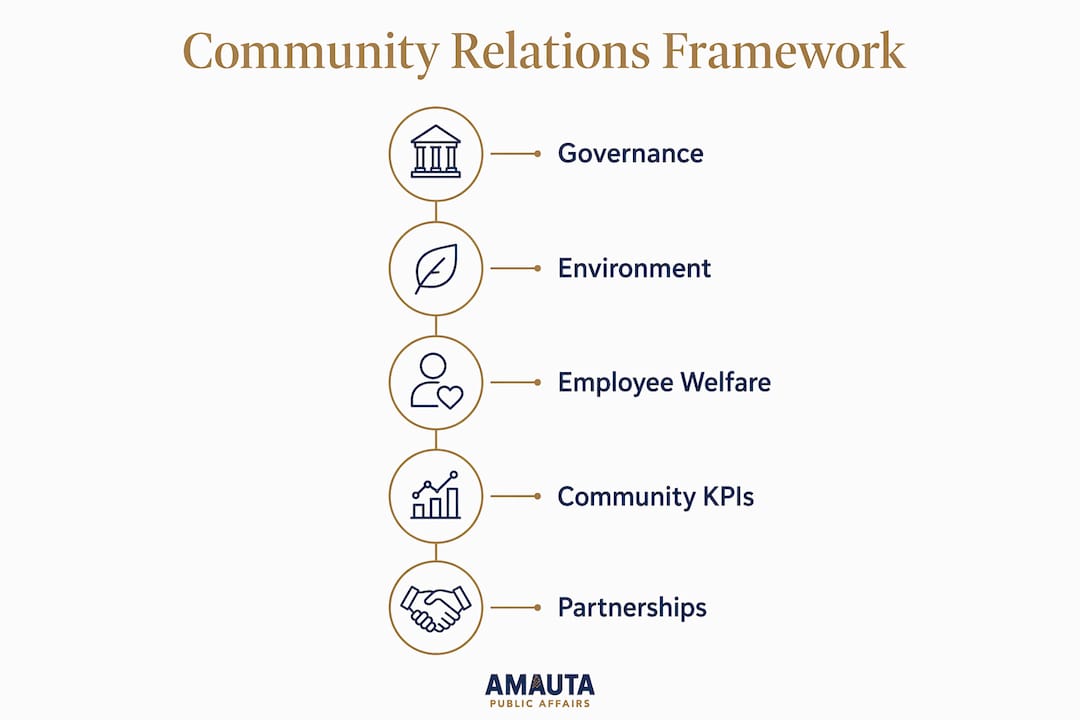
Effective corporate community relations programs are built on a five-component framework covering governance, environmental priorities, employee welfare, stakeholder engagement, and community investment. Each component connects directly to business operations and creates a structure that can be measured, reported, and improved over time. Without this framework, community relations efforts tend to be reactive and inconsistent.
Governance sets the internal rules for how a company makes decisions that affect communities. Strong governance means community concerns are escalated to leadership, not handled only at the project level. It also means accountability is built into the process from the start.
Environmental priorities address how business operations affect local ecosystems, air quality, water, and land use. Companies operating in sectors like energy, construction, or manufacturing carry a higher burden here. Documenting environmental commitments and reporting on them publicly signals credibility to community stakeholders.
Employee welfare connects internal culture to external reputation. Communities notice when a company treats its workers well. Local hiring rates, fair wages, and workforce development programs are visible signals that a business is genuinely invested in the area.

Stakeholder engagement and community investment are the two most visible components. Stakeholder engagement means creating formal channels for community input, not just holding a single public meeting. Community investment includes financial contributions, volunteer programs, and infrastructure support.
Key metrics used to track these components include:
Community investment levels (total dollars committed per year)
Local hiring percentages relative to total workforce
Number of documented stakeholder consultations
Environmental compliance and incident reporting rates
Employee volunteer hours logged
ISO 26000 and GRI standards guide the selection of these KPIs to ensure they reflect genuine impact rather than surface-level activity. Aligning your metrics to these standards also makes public disclosure more credible.
Pro Tip: Map each KPI directly to an operational data source before launching your program. If you cannot pull the number from an existing system, the metric will not survive past the first reporting cycle.
How should organizations build and maintain strong community partnerships?
Strong community partnerships require formal structure from the beginning. Written partnership agreements with quarterly reviews are the standard for ensuring both parties stay aligned and accountable. Informal handshake arrangements tend to dissolve when staff changes or priorities shift.
Building a productive partnership follows a clear sequence:
Identify mutual value. Before approaching any community organization, define what your company offers and what you genuinely need in return. Vague offers of “support” rarely generate commitment from community partners.
Make a specific ask. Short, mission-focused outreach with a concrete request produces better responses than broad invitations to collaborate. State the goal, the timeline, and the expected contribution from each party.
Draft a written agreement. The agreement does not need to be a legal contract, but it should document roles, resources, timelines, and success criteria. This protects both parties and creates a reference point for reviews.
Schedule quarterly reviews. Reviews are not just check-ins. They are structured assessments of whether the partnership is producing the outcomes both parties expected. Use them to adjust terms, address friction, and document progress.
Communicate between reviews. Regular updates, shared data, and open channels prevent small misalignments from becoming partnership-ending conflicts.
The most common reason partnerships fail is a mismatch in expectations about what each party will contribute. Clarifying this in writing before the partnership launches eliminates most of that risk. Organizations that avoid common community relations mistakes treat partnership agreements as living documents, not one-time formalities.
Pro Tip: When drafting your outreach message to a potential community partner, keep it under 150 words. State your mission, the specific opportunity, and one clear next step. Longer messages signal unclear thinking.
What engagement strategies foster authentic two-way community dialogue?
Authentic community engagement is defined by two-way dialogue, not one-way broadcasting. Industry guidance from 2026 confirms that one-way communication is now considered outdated and counterproductive. Communities expect to be heard, not just informed.
The shift from broadcasting to dialogue requires deliberate design. Posting updates on a website or sending newsletters does not constitute engagement. Real dialogue means asking questions, responding to comments publicly, and creating conditions for peer-to-peer connections within the community itself.
Effective two-way engagement strategies include:
Facilitated public forums where community members set part of the agenda, not just respond to a company presentation
Iterative feedback loops with specific follow-up schedules that show stakeholders exactly how their input shaped decisions
Human-centered storytelling using testimonials from community members, not corporate spokespeople, to communicate impact
Digital channels that allow asynchronous participation, so people who cannot attend meetings can still contribute
Transparent expectation-setting about what level of influence the community actually has on decisions
That last point matters more than most organizations acknowledge. Practitioners must clarify whether engagement is organization-led, collaborative, or community-led, because each type carries different expectations about decision-making power. Misrepresenting this creates distrust that is very difficult to repair.
Storytelling deserves particular attention. A resident describing how a local hiring program changed their family’s situation carries more credibility than any corporate press release. Building a library of these testimonials and sharing them through local media relations amplifies authentic voices and strengthens community trust over time.
How can companies measure and report the impact of their community relations efforts?
Measuring community relations impact requires tracking both community outcomes and business outcomes simultaneously. Focusing only on community metrics misses the business case. Focusing only on business metrics misses the point of the program entirely.
Measurement and public disclosure improve accountability and build trust with community stakeholders. Transparency about what worked and what did not is as important as reporting successes.
Metric Category | Example KPI | Data Source |
Community investment | Total annual dollars committed | Finance / CSR budget |
Local hiring | Percentage of new hires from target area | HR system |
Stakeholder consultation | Number of documented sessions | Engagement log |
Volunteer contribution | Total employee volunteer hours | HR / volunteer platform |
Business outcomes | Customer referrals, social media reach | CRM, analytics tools |
Tracking volunteer hours, funds raised, and people served alongside business metrics like customer referrals and social media engagement gives a complete picture of program performance. Tools like Google Analytics and community surveys provide the data layer that connects engagement activity to measurable results.
Public disclosure is the final step that converts measurement into trust. Publishing an annual community impact report, even a brief one, signals that your organization takes accountability seriously. Openly discussing shortcomings and publishing methodology notes alongside results is now considered a best practice, not an optional extra. Communities are sophisticated enough to recognize when a report only highlights wins.
A clear KPI framework aligned with ISO 26000 and GRI guidance enables continuous improvement, not just annual reporting. When metrics are tied to operational systems, they update in real time and allow program managers to course-correct before problems become public.
Key Takeaways
Corporate community relations programs succeed when they combine a structured framework, formal partnerships, two-way dialogue, and transparent measurement aligned with ISO 26000 and GRI standards.
Point | Details |
Use a five-component framework | Governance, environment, employee welfare, stakeholder engagement, and community investment form the foundation. |
Formalize every partnership | Written agreements with quarterly reviews prevent misalignment and protect both parties. |
Replace broadcasting with dialogue | Two-way engagement with feedback loops and follow-up schedules builds genuine trust. |
Measure both sides of the equation | Track community outcomes and business outcomes together for a complete performance picture. |
Disclose openly, including failures | Publishing methodology and acknowledging shortcomings strengthens credibility with community stakeholders. |
What I have learned about community relations that most guides get wrong
The standard advice on corporate community relations focuses heavily on process: build a framework, sign agreements, track KPIs. That advice is correct. But it misses the single biggest variable, which is organizational willingness to be uncomfortable.
Most programs stall not because the framework is wrong, but because leadership pulls back the moment community feedback becomes critical. A stakeholder forum that surfaces genuine opposition is not a failure. It is the program working exactly as intended. The organizations that build lasting community trust are the ones that stay in the room when the conversation gets hard.
I have also seen companies treat transparency as a risk to manage rather than a tool to use. Publishing past failures openly and explaining what changed is one of the most credible things an organization can do. Communities do not expect perfection. They expect honesty. The gap between those two expectations is where most corporate community relations programs either build real equity or lose it permanently.
The shift toward two-way dialogue is real and accelerating. Organizations that still rely on one-way communication are not just behind on best practices. They are actively eroding the trust they need for project approvals, permits, and long-term social license to operate. The pathway forward is not complicated. It requires commitment, consistency, and the discipline to measure what actually matters.
— Ignacio
How Amautapublicaffairs supports your community relations program
Corporate communication professionals who need to move from theory to execution benefit from working with a firm that has built these programs across complex, high-stakes environments.
Amautapublicaffairs brings a campaign-style approach to community engagement strategy, combining stakeholder mapping, media relations, and digital advocacy into a single, coordinated program. The team assesses your community context, identifies key priorities, and builds messaging frameworks grounded in real feedback. Every tactic is measured and refined based on results, not assumptions. Whether you are managing a land use project, an energy initiative, or a complex permitting process, Amautapublicaffairs provides the structure and expertise to build community support that holds. Connect with the team to discuss your specific situation.
FAQ
What is community engagement in a corporate context?
Community engagement is the structured process by which a company creates ongoing dialogue with the people affected by its operations. It goes beyond public announcements to include feedback loops, stakeholder consultations, and shared decision-making.
How does ISO 26000 apply to corporate community relations?
ISO 26000 provides international guidance on social responsibility, including how organizations should engage with communities, measure impact, and report outcomes. It is not a certification standard but a widely used reference framework for building credible programs.
What are the most important KPIs for community relations programs?
The core KPIs are community investment levels, local hiring percentages, documented stakeholder consultation counts, and employee volunteer hours. Business-side metrics like customer referrals and social media engagement complete the picture.
How often should companies review community partnerships?
Quarterly reviews are the standard cadence for assessing partnership productivity and alignment. Reviews should evaluate progress against agreed terms and identify any adjustments needed before problems escalate.
Why does two-way dialogue matter more than one-way communication?
One-way communication informs communities but does not involve them. Two-way dialogue creates the feedback loops and peer connections that build genuine trust, which is the foundation for long-term social license to operate.
Recommended
Comments