
Public Affairs Consulting Services for Land Use Projects
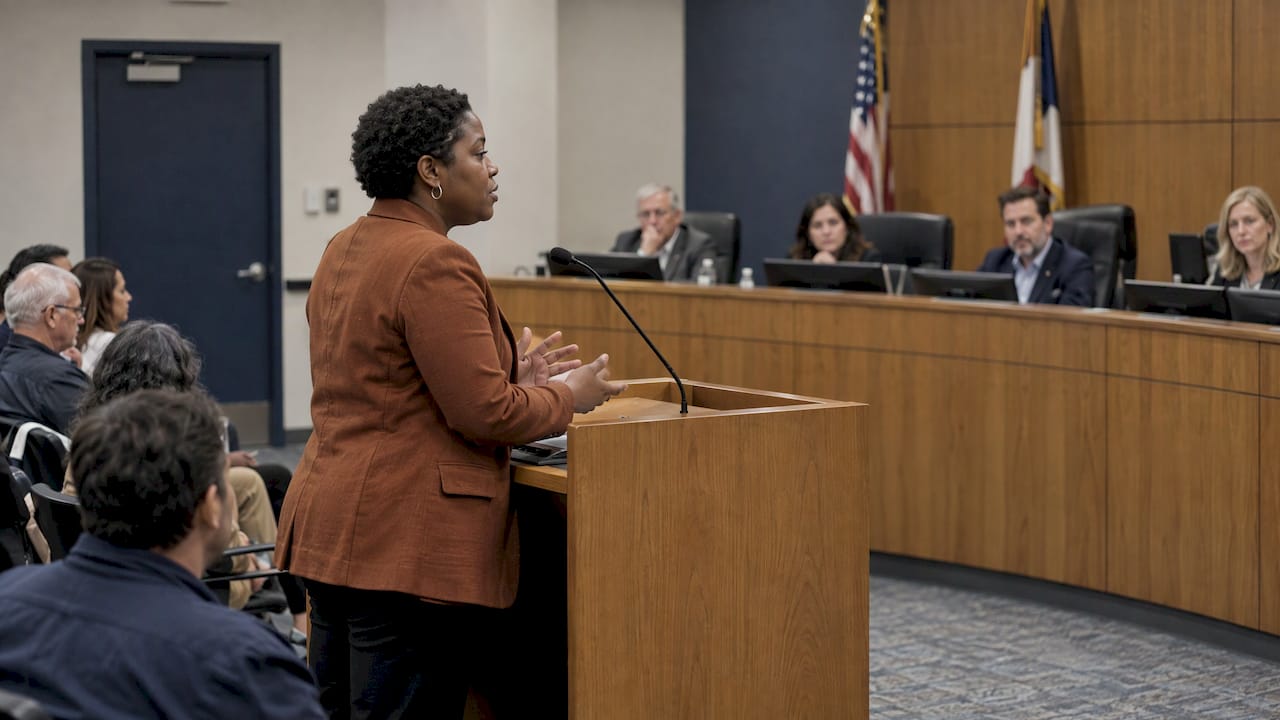
Public affairs consulting services help an organization earn public and official support for a decision that depends on both. For land use, energy and infrastructure projects, that means assessing the community, engaging stakeholders, handling media, and moving supporters to the hearing room. The strongest engagements run like a campaign: tailored to one place, measured as they go, and adjusted as feedback comes in. That is how AMAUTA Public Affairs approaches campaign management, community relations, media relations and permitting support for developers, local governments, nonprofits, environmental organizations and business owners.
This guide explains what public affairs firms do, how an engagement works, and how to tell whether your project needs one.
TL;DR
Public affairs is the work of building relationships with policymakers, the media, community groups and other stakeholders so the public understands and supports your position.
For land use, the useful services are community assessment, stakeholder mapping, community engagement, media relations, digital advocacy, coalition building, permitting support and supporter turnout.
A sound engagement moves in a loop: assess, prioritize, engage, measure, adjust, then evaluate against the aims you set at the start.
Lobbying carries disclosure rules that general public affairs outreach does not, so ask counsel where a program targets a specific bill, rule or permit decision.
You likely need support when opposition is organized, when a hearing date is set, or when your team lacks time to run outreach alongside the project.
Table of Contents
What public affairs consulting services include
Public affairs covers an organization’s overall efforts to influence public opinion through public relations, media relations and community outreach. According to Bloomberg Government, the people doing it build relationships with policymakers, industry groups, associations, the media and other stakeholders to explain the organization’s positions to the public.
A public affairs consultant brings that function to your project as an outside team. For a land use client, the work usually falls into a handful of services:
Community engagement and relations: structured ways for residents, neighbors and local organizations to learn about a project and shape it.
Stakeholder relations: direct, sustained contact with elected officials, agencies, business groups and civic leaders.
Media relations: a consistent, accurate narrative in local press, so the first story residents read is not written by opponents.
Digital advocacy: online tools that reach people where they already follow local issues and give supporters an easy way to act.
Coalition building: organized support from groups that share an interest in the outcome.
Permitting support: aligning outreach with the administrative process so that public input and agency review reinforce each other.
Supporter turnout: getting informed supporters to meetings and hearings, where decisions are made on the record.
Branding and marketing: a clear identity and materials that make a project understandable and credible.
AMAUTA Public Affairs offers each of these, and the list matters because land use fights are rarely lost on one front. A project can have a strong media story and still lose because supporters never showed up, or have a packed hearing room and still stall because no one mapped the agency relationships.
Public affairs, public relations and government relations
The terms overlap, and readers often search them interchangeably. A LibreTexts chapter on the topic describes government relations as the branch of public relations that helps an organization communicate with governmental publics. Public affairs, it adds, helps an organization interact with government, legislators, interest groups and the media, often through grassroots initiatives.
In practice:
Public relations shapes how an audience sees you.
Government relations concentrates on officials and agencies.
Public affairs joins both with community and grassroots work, because a decision-maker’s view of a project is shaped by what constituents say.
For a developer or a city planning office, that third piece is the one that decides outcomes. A council member weighing a rezoning reads the room: who spoke, how many, and whether the project’s description matches what neighbors have heard.
Where lobbying rules come in
Lobbying is a distinct, regulated activity. Under the Lobbying Disclosure Act, lobbying activities must be disclosed, and the Foreign Agents Registration Act requires people representing foreign interests to disclose their relationships, activities and compensation to the Department of Justice. Per Bloomberg Government, public affairs efforts are not regulated in the same way. State and local rules vary as well.
The practical step: if any part of your program is aimed at a particular bill, rule, permit or procurement decision, have an attorney confirm whether registration or reporting applies before outreach begins. A good consulting engagement is scoped with that question on the table from day one.
How a consultant assesses a community
Every credible approach starts with a granular look at the community before any message is written. Public agencies publish the frameworks, and they show what a thorough assessment contains.
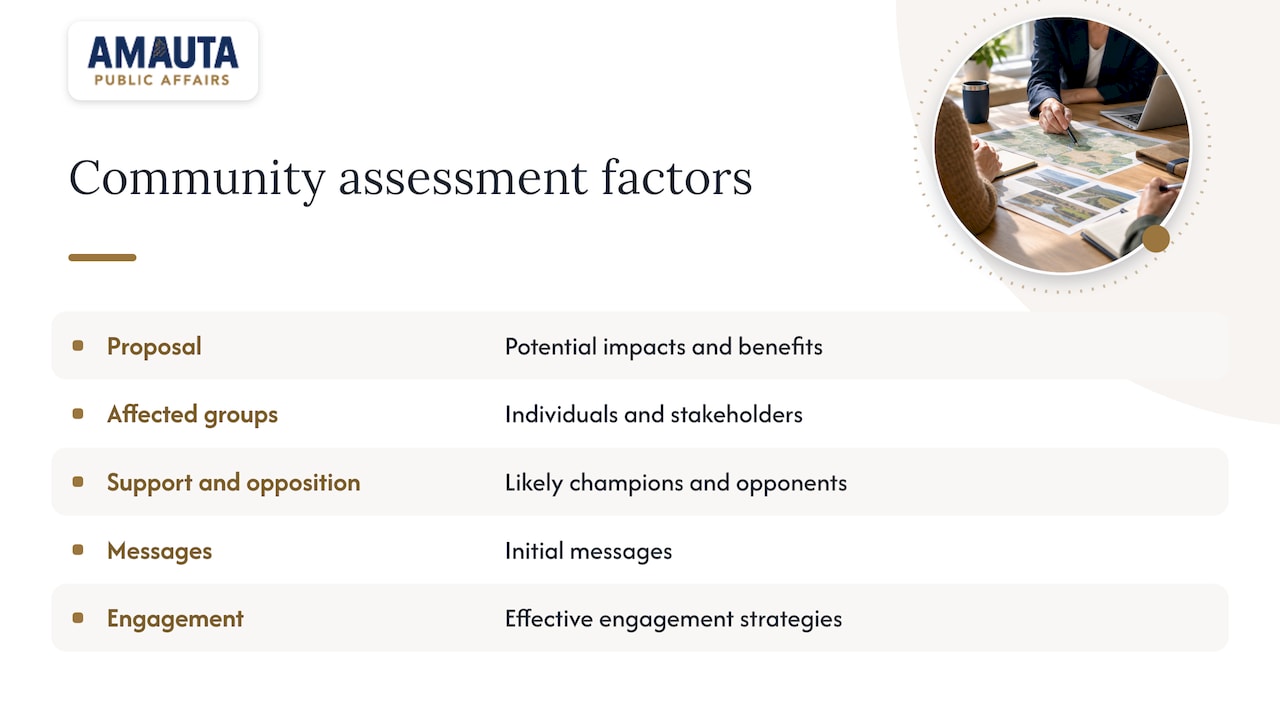
The Oregon Department of Land Conservation and Development’s Putting the People in Planning guide recommends brainstorming the potential impacts and benefits of a proposal, the affected individuals and groups, likely champions and opponents, initial messages, and effective engagement strategies. The California Air Resources Board’s draft Community Engagement Model frames similar questions: who will be affected positively or negatively, who needs to know, who can contribute to the conversation, and which stakeholders have prior experience with similar actions.
Stakeholder mapping and prioritizing
A stakeholder map puts the issue at the center and shows everyone with a stake, how they are connected, and where they stand. The IOCN-RICO Stakeholder Engagement Guide color-codes position: red for a barrier, neutral, green for an ally. It then sorts stakeholders on an influence and interest grid:
Influence | Interest | Treatment | Effort |
High | High | Collaborate | Most |
High | Low | Consult | Substantial |
Low | High | Involve | Moderate |
Low | Low | Inform | Least |
The value of the grid is discipline. A project team with limited hours cannot meet every resident one on one, and a map shows which relationships will move the decision and which only need clear information.
Matching outreach to what people think
One message does not fit a whole community. The Oregon guide recommends two-way communication with active supporters, targeted information for people who are somewhat opposed, and structured in-person involvement for people who are actively opposed. That last point is often the hardest for project teams, who tend to avoid opponents when the evidence favors sitting down with them early.
The same guide sets out principles that hold up on any project:
Be truthful.
Be clear about how much the public can actually influence the decision.
Listen, and take input seriously.
Focus on interests, not positions, by asking why.
Say so when you do not know, and follow up.
Admit mistakes.
Follow through on every commitment.
The second principle connects to the IAP2 Spectrum of Public Participation, which runs from inform, consult and involve through collaborate to empower, each with its own promise to the public. Telling residents they are being consulted when the design is fixed damages trust faster than saying plainly that the site plan is set and the open questions are buffers, traffic routing or construction hours.
For controversial projects, the Oregon guide describes a repeating cycle: listen, think, explore, convene, repeat. Facilitated dialogue of this kind is slower than a mailer, and it is how skeptical neighbors become participants.
Media, digital and coalition work
Once the assessment shows who matters and what they worry about, the tools follow.
Media relations gives local reporters accurate facts, access to the right spokesperson and a steady record. Early, consistent contact matters because a project’s first public description tends to stick.
Digital advocacy reaches residents who will never attend a meeting but will read a local group’s feed or sign a letter. It also gives supporters a one-step way to act, which is the bridge to turnout.
Coalition building brings in trades, small businesses, housing advocates, conservation groups or youth organizations whose interests align with the outcome. A decision-maker hears a coalition differently than a single applicant.
Supporter turnout converts all of this into presence at the moment of decision. Hearing records are what boards and councils cite, so quiet support that never reaches the record does not count.
These tools work best when sequenced and measured together. Reading how people respond, and adjusting, is the part that separates a campaign from a communications calendar. If you track engagement in your own channels, this overview of incorporating user feedback shows how feedback loops keep content credible with the audience it serves.
How an engagement typically runs
While each project differs, a well-run public affairs engagement follows a recognizable arc.
Opportunity and risk assessment. Review the project, the approval path, the community landscape and the political setting. Identify champions, opponents and the undecided.
Priorities and strategy. Choose a small number of objectives tied to the decision calendar: the application, the hearing, the vote. Set how you will measure progress.
Message development. Write plain-language explanations of benefits, impacts and mitigation, tested with people who are not on your team.
Outreach and engagement. Meetings, briefings, door-to-door contact, media, digital channels, coalition recruitment.
Real-time adjustment. Use what you hear, from attendance to questions to press coverage, to shift tactics rather than wait for a final report.
Decision-point mobilization. Prepare supporters and testimony for hearings and votes.
Evaluation. Document what happened and why.
The IOCN-RICO guide describes the last step well. A final evaluation should ask whether the engagement met its own aims, met participants’ explicit and implicit expectations, and met good-practice standards. It should also ask whether participation levels, methods and costs were appropriate and whether responses were dealt with effectively. The guide stresses documenting results and communicating how stakeholder input will be handled, which builds credibility for the next project. Our own approach follows the same logic: results-driven tactics refined continuously from real-time feedback, so the evaluation is not a surprise.
Is your project a fit? Signs you need support
Different readers arrive at the same point from different directions:
Developers often call when opposition has organized, a hearing date is on the calendar, or a first public meeting went badly.
Local government officials need a defensible, inclusive process for a plan, ordinance or facility, and staff time is already committed elsewhere.
Environmental organizations look for collaborative engagement with landowners, agencies or industry rather than a purely adversarial campaign.
Business owners want to build trust before an expansion, a siting decision or a license request.
Nonprofit leaders need clear public messaging and a way to turn a supportive audience into visible action.
A useful test: can your team name the ten people or groups who will most influence the decision, and say where each stands? If not, the assessment alone is worth doing before spending on outreach. Our guides on stakeholder communication for land use projects and on why permitting outreach must do more than notify go deeper on the early steps.
What to expect from a firm
When you compare firms, look for fit rather than size. Large firms with national government relations practices are built for federal policy and complex corporate agendas. A land use project turns on a local record, local relationships and a specific approval calendar, so look for:
A methodology tailored to your community rather than a template.
Services that cover the whole path, from assessment through hearing, in one team.
A plan to adjust tactics from feedback during the engagement.
Clear scoping of what counts as lobbying and what does not.
Evaluation criteria agreed at the start.
Public affairs work is project-based, with fees set by scope, so expect the conversation to start from your approval timeline, the stakeholders involved and the services you need.
Promo: public affairs services built for land use
AMAUTA Public Affairs offers campaign management, community relations, stakeholder relations, media relations, digital advocacy, coalition building, branding and marketing, permitting support and supporter turnout for land use, energy, infrastructure and commercial development projects. Our campaign-style approach assesses the opportunity, sets key priorities and recalibrates tactics as real-time community feedback comes in. See the full list of services, or get connected to talk through your project.
Perspective
Most land use disputes we are asked about began as communication problems that were left alone for too long. A project is announced, a rumor fills the gap, and by the time a hearing is scheduled the community has already made up its mind about who the project is for. We build every engagement as a campaign for that reason. A campaign has a defined decision, a defined audience, a calendar and a way of measuring whether you are gaining ground. It also adjusts. When feedback from a community meeting, a local reporter or a supporter survey tells us a message is not landing, we change it that week, not after the vote. We also think trust is a prerequisite, not a byproduct. That means telling residents honestly what they can influence, meeting opponents in person, and keeping each commitment. Permitting support, coalition building, media and turnout then reinforce one another because they come from the same plan. If your project depends on public support, begin the assessment before the opposition does. Ignacio
FAQ
What does a public affairs consultancy do?
It helps an organization build understanding and support among policymakers, media, community groups and the public. For land use projects, that includes assessing the community, mapping stakeholders, running engagement, handling media, organizing supporters and aligning outreach with the permitting process.
Is public affairs the same as lobbying?
No. Lobbying is a regulated activity with disclosure requirements, while broader public affairs efforts such as community outreach are not regulated in the same way, according to Bloomberg Government. If a program targets a specific bill, rule or permit decision, ask an attorney whether registration applies.
When should a developer or agency bring in a public affairs consultant?
Earlier than feels necessary. The best time is before a project is announced, so the first description residents hear is accurate. Organized opposition, a scheduled hearing or a stalled permit are also clear signals to start.
How is success measured?
By the aims set at the start: understanding among stakeholders, the strength and visibility of support, how well questions were answered, and movement toward the decision. A good engagement also reviews whether methods and responses were appropriate, as the Stakeholder Engagement Guide recommends.
Sources
Recommended
Comments