
Why Land Conservation Partnerships Matter for Communities

Land conservation partnerships matter because no single landowner, agency, or nonprofit can match the scale, funding, and legitimacy that collaboration produces. A land trust alone can protect a parcel; a coalition of trusts, agencies, and residents can protect a watershed. The mechanism is straightforward: partners pool money, share monitoring duties, and build the local trust that keeps a conservation deal intact for decades rather than years.
This article covers three things:
The concrete benefits partnerships deliver, backed by measured outcomes.
How partner roles typically break down, and what to look for before you sign on.
Practical first steps for individuals and communities ready to act.
Key Takeaways
Land conservation partnerships succeed when accredited land trusts, engaged communities, and funding programs like USDA’s CRP align around shared governance and long-term stewardship.
Point | Details |
Scale drives impact | Collaborative partnerships cut tree cover loss by up to 66% in high-pressure areas, far more than solo efforts. |
Accreditation signals reliability | The Land Trust Accreditation Commission’s Seal shows a trust has passed governance and financial review. |
USDA programs need coordination | CRP and other incentive programs pay off more when partnerships focus efforts across connected parcels. |
Equity requires planning | Conservation-driven property gains have skewed toward wealthier households, so benefit-sharing terms matter. |
Amautapublicaffairs fills the gap | The firm supports coalition building, permitting, and messaging for organizations assembling land partnerships. |
Table of Contents
Why Land Conservation Partnerships Matter: The Concrete Benefits
The benefits break down into five categories: landscape-scale reach, pooled expertise, shared financing, stronger stewardship, and policy influence. None of these show up when one organization works alone, no matter how well-funded it is.
Scale: partnerships let projects span property lines, county boundaries, and jurisdictions that a single owner or agency cannot touch.
Expertise: land trusts bring legal and transactional knowledge; universities and agencies bring ecological data.
Financing: shared costs and matched grants make landscape-scale deals financially possible.
Stewardship: multiple partners can split long-term monitoring duties instead of one entity carrying the entire burden.
Advocacy: coalitions carry more weight with regulators and legislators than a lone voice does.
The clearest evidence comes from Africa, where researchers studied 127 collaborative management partnerships across 16 countries and found they reduced annual tree cover loss by about 55 percent on average, and by 66 percent in areas facing the heaviest human pressure. That is not a marginal improvement. It is the difference between a protected area holding its forest and one losing it acre by acre.
Closer to home, university researchers working alongside land trusts have documented similar patterns on private working lands, where combined ecological and economic reporting helps landowners see returns that neither science nor land management alone would surface.
How Land Conservation Partnerships Work
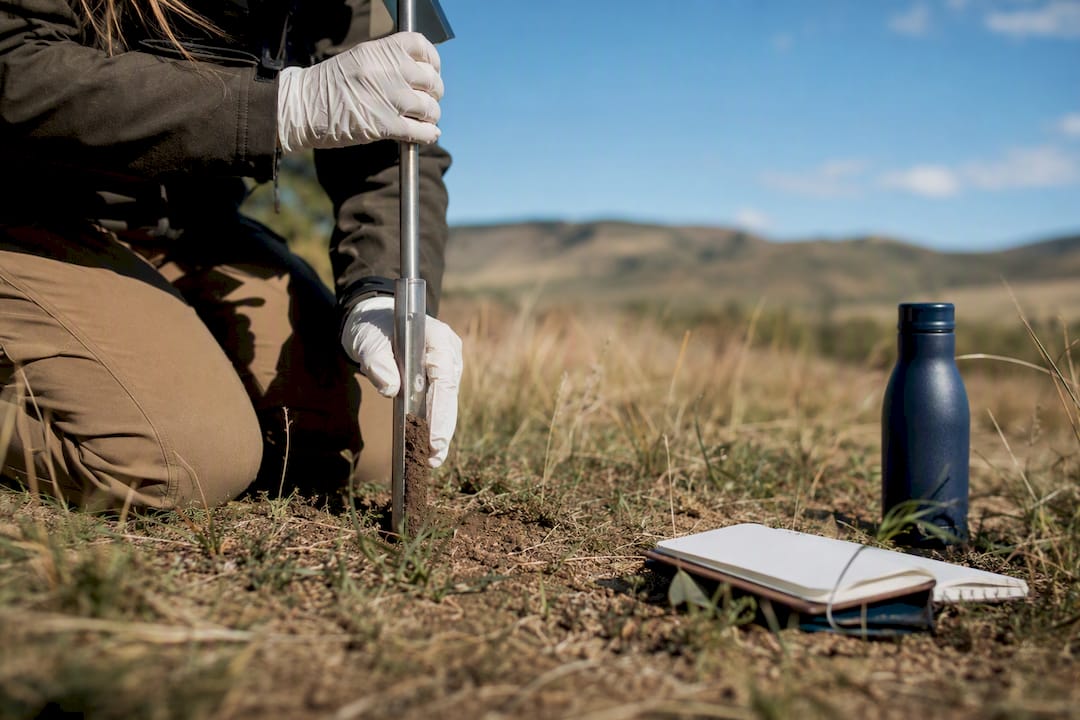
A functioning partnership usually includes several distinct roles, each filled by a different type of organization. Land trusts handle legal transactions like easements and fee-simple acquisitions, and often carry the accreditation that signals long-term reliability, which is why consulting a Land Trust Attorney can be essential in these processes. Local landowners and community groups contribute site knowledge and, critically, the social license to operate. Government agencies, especially the USDA, bring incentive programs and technical assistance. Universities and researchers supply baseline data and monitoring design. Private funders close financing gaps that public money cannot cover.
Land trusts: transactions, legal structure, accreditation.
Landowners and community groups: local knowledge, consent, ongoing access.
Government agencies: funding programs, technical standards.
Researchers: data, monitoring frameworks.
Private funders: matched capital, bridge financing.
Interview-based research on threatened-species partnerships identifies six conditions tied to success: building a skilled consortium, finding alignment among partners, managing the partner interface, securing funding, generating measurable value, and sustaining advocacy and awareness.
Guidance from large landscape-scale projects backs this up, stressing that formal collaboration tools and attention to relational dynamics, not just legal paperwork, determine whether a partnership survives past its first grant cycle.
What to Look for in a Conservation Partner
Not every organization that wants to partner is ready to be a good one. Before committing land, time, or funding, run potential partners through a short checklist.
Accreditation and track record: does the land trust carry the accreditation “Seal” from the Land Trust Accreditation Commission, and can it point to completed acres and closed transactions?
Governance and financial controls: is there a real board, audited finances, and a stewardship endowment, not just a mission statement?
Monitoring plans: is there a documented, funded plan for checking on the land in year 20, not just year one?
Community ties: has the partner worked in your area before, and do residents trust it?
Clarity on terms: are easement or fee-simple terms written in plain language, with rights and responsibilities spelled out?
Accreditation matters more than it sounds. The Land Trust Alliance built its Land Trust Accreditation Commission specifically because too many small land trusts formed with good intentions and no capacity to enforce an easement decades later. A trust carrying the Seal has been vetted on governance, finances, and transaction standards.
Pro Tip: A red flag worth walking away from is a partner who cannot describe how stewardship gets funded after the initial deal closes. If the answer is “we’ll figure it out later,” the monitoring almost never happens.
How Partnerships Unlock Funding and Incentive Programs
Partnerships change what is financially possible for an individual landowner. The USDA runs voluntary, incentive-based programs, including the Conservation Reserve Program (CRP), that pay landowners to retire environmentally sensitive land from production and restore habitat. The USDA reports working with more than 500,000 farmers and ranchers through conservation programs, and landscape-scale initiatives that focus effort across multiple properties tend to generate far larger returns than scattered, individual applications.
USDA and CRP: rental payments and cost-share for retiring sensitive acreage.
State mapping tools like ConserveVirginia: help landowners see where their property ranks on conservation priority and what incentives apply.
Local field offices and extension services: the practical entry point for most first-time applicants.
Nonprofit partners and matched grants: bridge the gap between what public programs cover and what a project actually costs.
Landscape-scale initiatives delivered through partnerships focus limited public dollars where they generate the most environmental and economic return, rather than spreading them thin across unconnected parcels.
A single landowner applying to CRP alone gets one property’s worth of impact. A coalition of neighboring landowners, coordinated by a land trust or extension office, can turn that into a connected corridor, which is usually what funders and agencies want to see before they commit larger grants.
Equity Risks Partnerships Need to Address
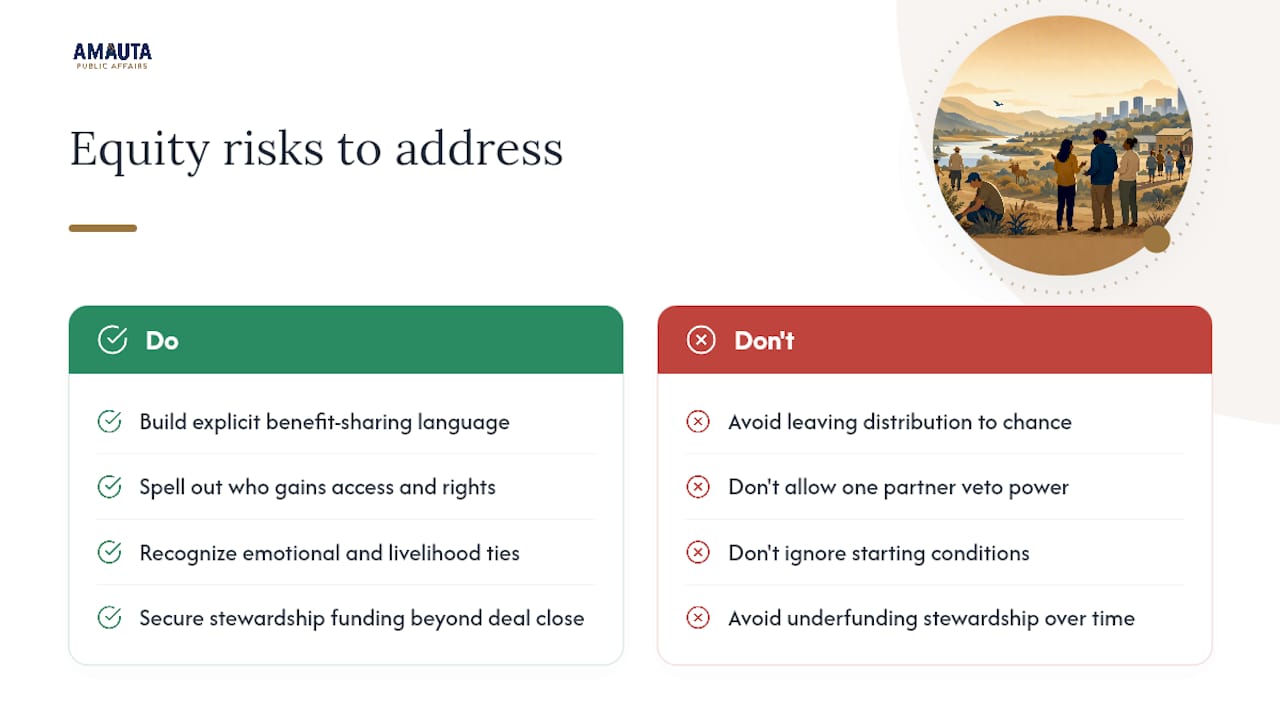
Conservation partnerships are not automatically fair to everyone they touch, and pretending otherwise sets up future conflict. Peer-reviewed research on U.S. land conservation found that protecting nearby land raises surrounding property values substantially, but those gains have not landed evenly. The same analysis estimates $9.8 billion in nationwide housing wealth gains from conserved land, with disproportionate benefits flowing to wealthier and White households in the samples studied.
Other common failure points include governance structures that give one well-funded partner effective veto power, and operational risk when stewardship funding runs dry a few years after a deal closes. Conservation impact also varies with starting conditions. A partnership that reduces deforestation dramatically in a high-pressure area may show minimal measurable effect in a place that was never seriously threatened, which matters when partners set expectations up front.
Recognizing partners’ emotional and livelihood ties to land, not just their legal or financial stake, reduces conflict and produces more durable outcomes over time.
Pro Tip: Build explicit benefit-sharing language into the partnership agreement from the start, spelling out who gains access, recreation rights, or economic benefit from the conserved land, rather than leaving distribution to chance.
How to Start a Conservation Partnership in Your Community
Getting from interest to an actual partnership follows a fairly predictable sequence:
Map local values and stakeholders: who cares about this land, and why?
Gather baseline data and identify what makes the parcel worth conserving.
Reach out to credible partners: a nearby land trust, your local extension office, or the USDA field office.
Draft a simple memorandum of understanding that spells out each partner’s role.
Seek small pilot funding or technical advice before committing to a large-scale deal.
Before signing anything, ask potential partners direct questions:
Who governs this partnership, and how are decisions made?
Where does long-term stewardship funding come from?
What does the monitoring plan look like in year 10?
What happens if a partner wants to exit?
Organizations navigating the community engagement side of this process often find that trust-building takes as much planning as the legal transaction itself.
What Strategic Partnerships Reveal About Lasting Conservation
The evidence throughout this piece points to a pattern worth stating plainly: conservation projects fail less often from bad ecology than from bad governance and thin community buy-in. Advising on land use and infrastructure projects across different regions makes one thing clear: the technical conservation plan is rarely the hard part. Aligning funders, agencies, and residents around a shared decision, and keeping that alignment through years of monitoring, is where partnerships either hold together or quietly fall apart.
How Amautapublicaffairs Supports Conservation Partnerships
Building a durable conservation partnership takes more than a signed easement. It takes stakeholder mapping, coalition building, and messaging that holds up when a project draws scrutiny from residents, regulators, or competing interests. That is the gap Amautapublicaffairs fills for developers, agencies, and nonprofits trying to move a land use or conservation project from concept to community support.
Amautapublicaffairs works through community engagement, media relations, and permitting support to help organizations navigate the administrative and political terrain that surrounds land decisions, terrain that a land trust or agency partner is rarely staffed to manage alone. If your organization is assembling a partnership and needs help building local trust or navigating approvals, visit the land management services page to see how a coordinated public affairs strategy fits into your project timeline, or explore the full services overview to start a conversation about your specific project.
Sources
Recommended
Comments