
$1,000–$15,000 Media Training Costs: Exact Quote Checklist for Leaders
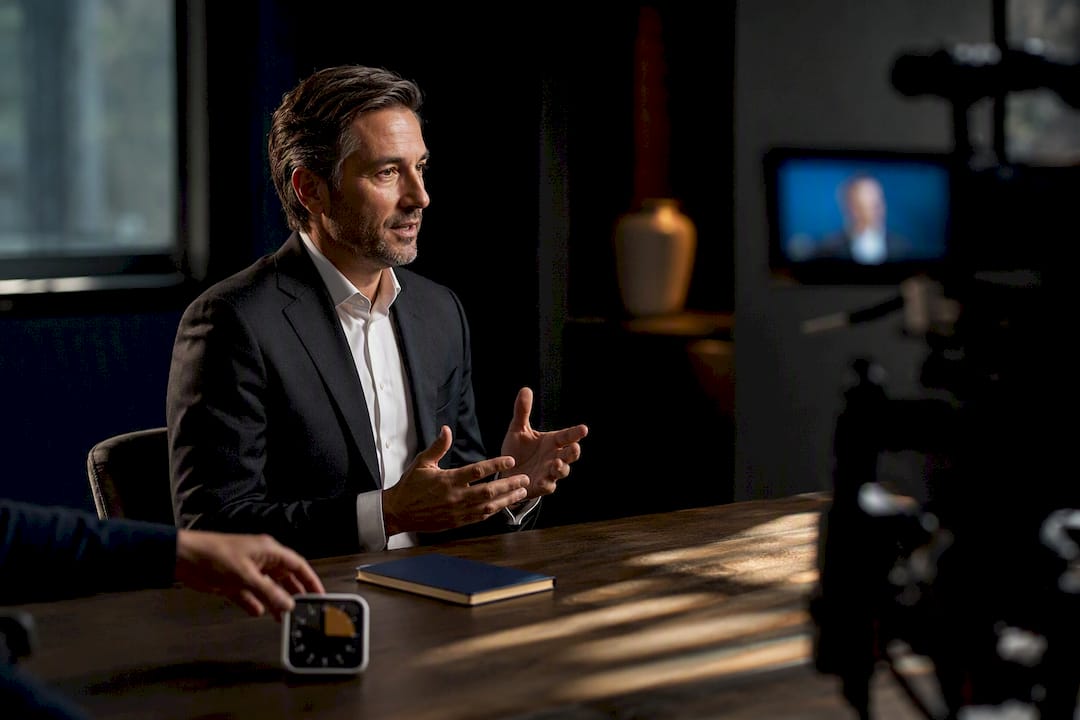
Plan to spend somewhere between $1,000 and $15,000 or more, depending on group size, trainer seniority, and how much customization the engagement requires. A half-day executive session with real on-camera practice typically lands near $5,000, which is a reliable planning figure for a single spokesperson. Teams, crisis prep, and multi-session retainers push well past that, while a short virtual refresher can cost far less.
TL;DR:
Virtual half-day sessions for a single spokesperson typically cost between $1,500 and $3,500, while in-person in the same range can reach $5,000.
Team workshops or full-day programs usually fall within $5,000 to $15,000, depending on group size and in-person or virtual delivery.
Crisis communication and ongoing retainers often start at $10,000 and can exceed $25,000, including tailored scenario development and follow-up support.
The total program cost should include travel, lodging, and equipment rental, which are often billed separately from the base training fee.
Vendors’ quotes are most accurate when they include detailed breakdowns of customization, simulation complexity, and participant practice needs.
Table of Contents
What Drives Media Training Cost: Pricing Bands Explained
Most engagements fall into three bands, and knowing which one applies to your situation is the fastest way to stop guessing at a budget.
The $1,000 to $5,000 band covers single-participant coaching, usually a half-day session focused on message development and a round of on-camera drills. This is where most first-time executive training lands, and it’s also where virtual delivery saves real money. A virtual half-day often runs $1,500 to $3,500, compared with $2,500 to $5,000 for the same session delivered in person once you account for a trainer’s travel time.
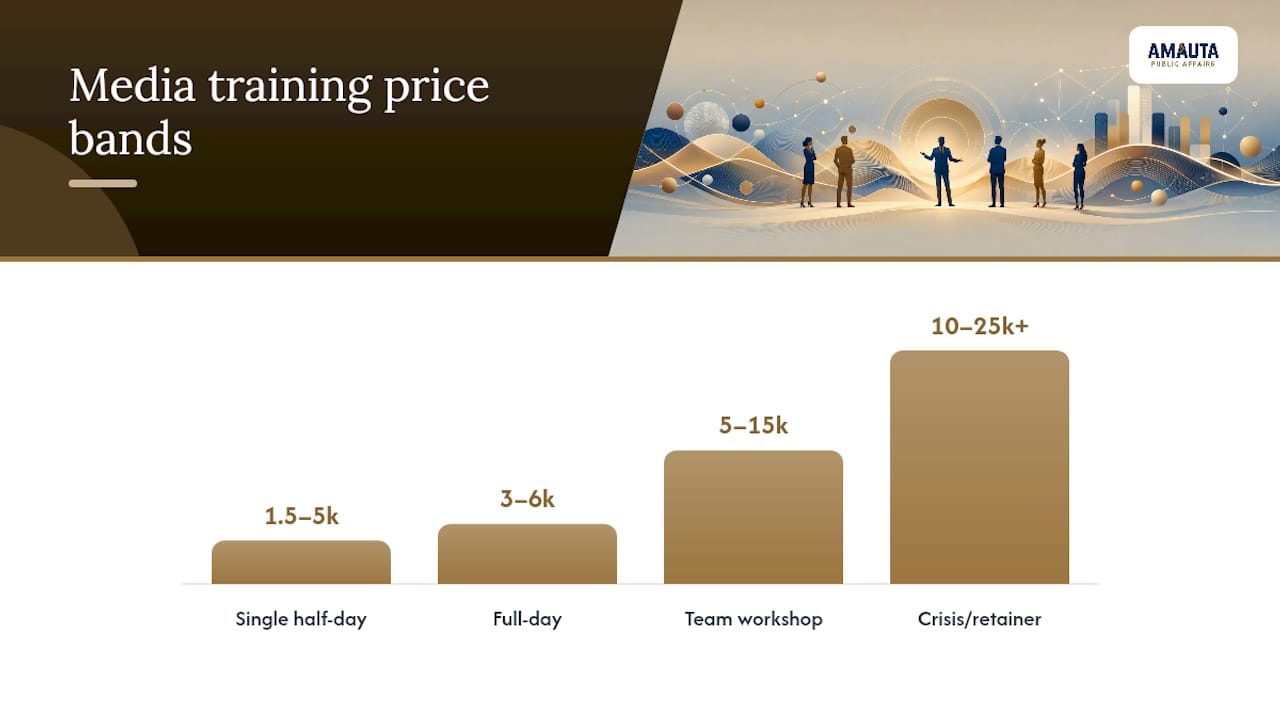
The $5,000 to $15,000 band is where full-day sessions and small team workshops sit. A full-day virtual program typically runs $3,000 to $6,000, while in-person full-day training or team workshops with multiple participants climb toward the higher end of this range because every additional person needs individual camera time to build real confidence.
The $15,000-plus band belongs to crisis communications packages, investor-relations prep, and ongoing retainers. These often start around $10,000 and can exceed $25,000 depending on how many sessions are included and whether the engagement includes playbook development or continuing on-call support.
Engagement type | Typical price range | Delivery format |
Single-participant half-day | $1,500–$5,000 | Virtual or in-person |
Full-day session | $3,000–$6,000 | Virtual or in-person |
Team workshop | $5,000–$15,000 | In-person (often) |
Crisis or retainer package | $10,000–$25,000+ | Multi-session |
Travel, lodging, and facility rental sit outside the base fee in most in-person quotes. Build those into your total before comparing vendors line by line.
Why Media Training Pricing Varies So Widely
Two factors explain most of the spread between a $1,500 quote and a $15,000 quote: who is running the session and how much individual practice each participant needs.
A trainer with a journalism or broadcast background, someone who has actually sat on the other side of a hostile interview, commands a premium over a generalist communications coach. That premium buys sharper questioning during mock interviews and faster identification of the exact phrasing that will get an executive in trouble on camera. Freelance coaches charging a few hundred dollars for quick tips rarely include this kind of guided, repeated practice.
Several other levers move price just as much:
Participant count. Every person needs multiple reps on camera to build muscle memory, so a five-person team costs more than double a solo session, not just five times a per-person rate.
Customization. Message mapping tailored to your industry, your project, or a pending controversy takes hours of prep work the trainer bills separately from the session itself.
Simulation complexity. A basic Q&A drill costs less than a full mock broadcast interview with lighting, a second camera angle, and a roleplay journalist trained to push back.
Equipment and facilities. Studio-style setups, professional recording, and venue rental all add line items beyond the trainer’s base fee.
Prep and travel time. A trainer flying in for a single day often bills for travel hours plus expenses at cost, sometimes with a small surcharge.
Pro Tip: Ask any vendor to break out customization and simulation costs as separate line items. That single request often reveals whether you’re paying for genuine bespoke work or a recycled generic deck with your logo added.
Sample Media Training Packages and What They Include
Vendors rarely publish a single price list because scope changes so much from client to client, but four package templates cover most real-world requests.
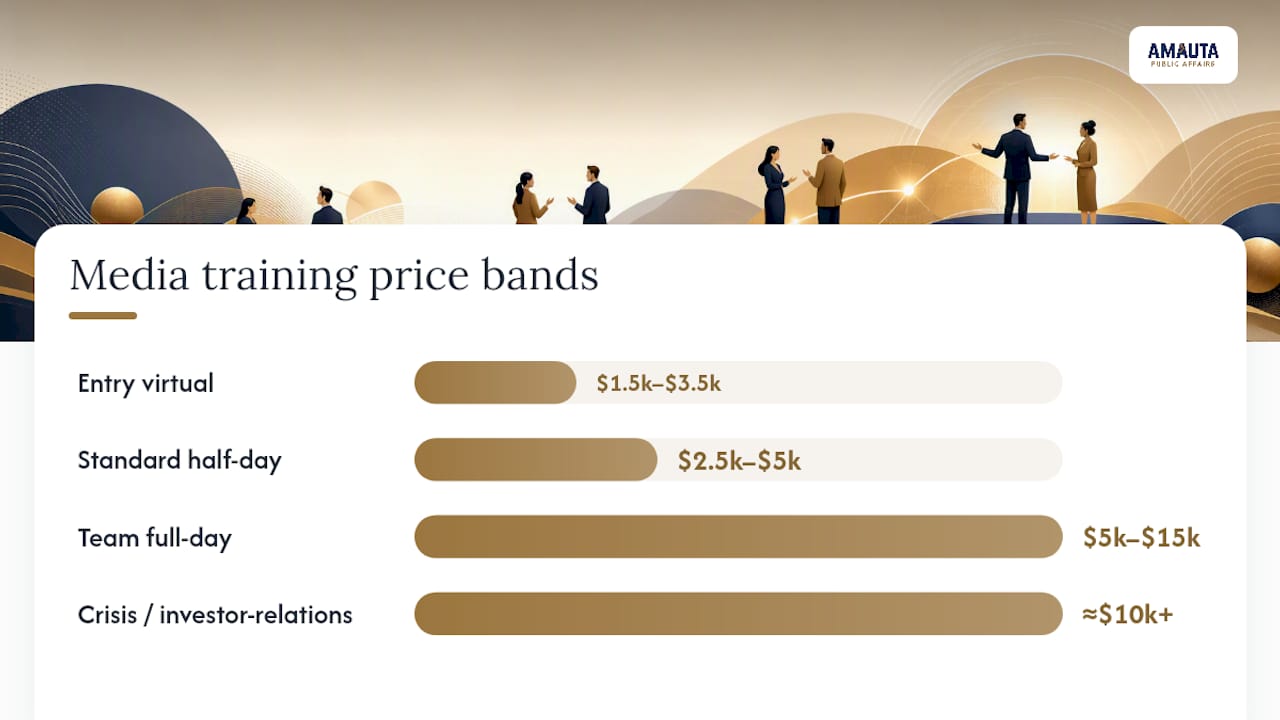
Entry virtual package. A half-day remote session for one executive, typically including a pre-session brief, message mapping, two to three recorded mock interviews, and written feedback. Expect $1,500 to $3,500.
Standard half-day executive package. In-person or virtual, built around a working agenda: message development in the morning, camera drills in the afternoon, and a wrap-up debrief with a recorded highlight reel. Expect $2,500 to $5,000.
Team full-day workshop. Group message alignment in the morning followed by individual on-camera coaching rotations in the afternoon, so each participant gets personal reps even in a shared session. Deliverables usually include per-person recordings and a written scorecard. Expect $5,000 to $15,000 depending on headcount.
Crisis or investor-relations package. Multi-session engagement covering scenario development, a written response playbook, live roleplay against a simulated hostile press pool, and follow-up coaching after the initial sessions. This is the format most likely to include ongoing spokesperson support rather than a single event. Expect a starting cost near $10,000, climbing higher with added sessions.
Every legitimate paid package should include some form of recorded on-camera practice and message mapping as a baseline deliverable, not an upsell.
Budgeting for Total Program Cost and Measuring ROI
The trainer’s quoted fee is rarely the full number you’ll actually spend. Travel and lodging get billed at cost, sometimes with a 10 to 15 percent surcharge, and facility rental or equipment rental for in-person simulations adds further cost on top of the base session price. Build a total-program estimate that adds these three categories to the vendor’s line-item quote before you compare it against a competing bid.
Measuring return on that investment doesn’t require anything exotic. Three metrics work well for most organizations: message accuracy in real interviews after training (did the spokesperson stay on message?), mock-interview scores tracked across sessions if you run a multi-part program, and the tone and framing of actual media coverage in the months following training.
Payment terms typically follow a standard consulting structure: a deposit due at booking, usually 25 to 50 percent, with the balance due at or shortly after delivery. Multi-session retainers often bill monthly instead of a single upfront payment, which helps smooth cash flow for organizations running longer crisis-prep engagements.
How to Get an Accurate Media Training Quote
A vague request produces vague, incomparable quotes. Structure your outreach so every vendor is pricing the same scope of work.
Write a one-page brief covering your audience, desired outcomes, timeline, and any prior media incidents or upcoming high-stakes coverage.
Request a discovery call. Most vendors can scope an accurate estimate from a short 15 to 30 minute conversation, so insist on one before accepting a flat quote.
Ask for a trainer’s CV and a sample agenda from a comparable past engagement, not a generic template.
Confirm deliverables in writing, including recording rights, written feedback, and any post-session materials.
Get line-item pricing that separates the base session fee from travel, equipment, and customization costs.
Ask about cancellation policy before signing, particularly for multi-session packages with deposits.
Treat a vendor who refuses to break out line items, or who quotes a firm price before any discovery conversation, as a warning sign rather than a convenience.
What Campaign-Style Media Training Looks Like in Practice
Media training that stops at camera drills misses half the job when a project involves permitting hearings, contested land use, or organized community opposition. Effective media relations strategy requires spokespeople who can hold a consistent message across a public hearing, a reporter’s phone call, and a town hall in the same week.
Campaign-style preparation treats every media appearance as one piece of a larger public affairs strategy, not an isolated event. The training has to account for stakeholder pressure, permitting timelines, and community sentiment that shifts week to week.
Spokesperson training can be built around that reality, drawing on public affairs experience with land use, energy, and infrastructure projects where the stakes of a single bad quote extend well beyond one news cycle.
What Actually Matters When You’re Paying for This
Most pricing guides treat media training like a commodity, one price for one product, when the honest answer is that cost variance exists for a reason. The $1,500 virtual session and the $15,000 crisis package aren’t the same service at different price points; they’re solving different problems.
The conventional advice tells buyers to shop for the lowest quote that includes “on-camera practice.” That’s the wrong first question. The right first question is whether the training accounts for your actual exposure, a routine product launch has different risk than a contested permitting fight, and pricing should follow risk, not the other way around.
If you take one thing from this guide, prioritize scope clarity over price shopping. A vendor who asks hard questions about your audience, your timeline, and your prior media history before quoting a number is doing the diligence that makes training actually work. A vendor who quotes instantly is pricing a generic product, not your situation.
— Ignacio
Getting a Scoped Quote for Your Team
Media training can be approached as one piece of a broader public affairs strategy rather than an isolated coaching session, which matters most when your spokesperson needs to hold a consistent message across permitting hearings, reporter calls, and community meetings in the same week.
Common buyer needs map directly to specific services: spokesperson and message training falls under media relations, stakeholder-facing prep pairs with community relations and coalition building, and crisis-readiness work often overlaps with permitting support and stakeholder relations. Engagements are scoped individually rather than sold off a fixed rate card, since a single-executive refresher and a multi-stakeholder campaign require entirely different levels of preparation. If you have a project with real public exposure, the next step is a scoped conversation, not a guess. Get connected to talk through your timeline and request a quote built around your actual scope.
Where These Numbers Come From
The pricing bands in this guide draw on published vendor rate breakdowns from Success in Media and PR consultant Scott Steinberg’s cost guide, along with practitioner Q&A on training deliverables from Jess Todtfeld. For general outreach strategy beyond training itself, see this partner explainer on local media outreach fundamentals.
Sources
FAQ
How much does it cost to get media trained?
Expect $1,000 to $5,000 for a single-participant half-day session, $5,000 to $15,000 for full-day or team workshops, and $15,000 or more for crisis packages and multi-session retainers.
How much is a media training course?
Course-style pricing varies by format, but a virtual half-day typically runs $1,500 to $3,500, while in-person full-day sessions often land between $3,000 and $6,000 before travel and facility costs.
How long does media training take?
Most single-executive sessions run half a day to a full day, while team workshops or crisis-prep engagements often span multiple sessions over several weeks.
What does media training include?
A standard paid package includes message mapping, recorded on-camera mock interviews, and written feedback; higher-tier packages add scenario development and follow-up coaching, which is the model Amautapublicaffairs builds into its spokesperson training.
Is cheap or free media training worth it?
Low-cost coaching from freelancers can offer useful tips, but it typically skips the guided on-camera practice and message mapping that make paid training measurably change outcomes in real interviews.
Recommended
Comments