
How to Partner with Developers on Environmental Goals

The most effective way to partner with developers on environmental goals is to build the collaboration on three pillars from day one: structured governance, aligned financial incentives, and measurable KPIs tied to both operational and embodied carbon. Organizations that skip any one of these pillars tend to find themselves with a signed memorandum of understanding and no mechanism to enforce it. The IEA’s analysis of net-zero pathways frames this precisely: net-zero outcomes are a systems challenge that depends on coordinated, cross-sector action, not unilateral commitments.
Start here before your first partnership meeting:
Align on goals. Confirm that both parties share a specific, measurable environmental target (net-zero carbon by a defined year, LEED Gold, a GHG reduction percentage) rather than a general aspiration.
Establish governance. Identify a named sustainability lead and a project sponsor on each side who have authority to make decisions.
Design a pilot. Scope a single building, phase, or procurement cycle to test the collaboration before scaling.
Set monitoring protocols. Agree on which metrics get tracked, at what cadence, and by whom before construction begins.
Develop a community plan. Map stakeholders early and assign responsibility for public engagement to a named party.
Your first call should be with your organization’s sustainability lead and the developer’s project sponsor together. Within 90 days of that call, a well-structured partnership can produce a signed governance agreement, a pilot scope, and a baseline carbon measurement.
Key Takeaways
Effective developer environmental partnerships require structured governance, aligned financial incentives, and measurable KPIs set before design freeze, with community engagement and public-affairs support integrated from the start.
Point | Details |
Start before design freeze | Engage developers at project inception to influence embodied carbon before structural choices are locked in. |
Governance and KPIs first | Assign named owners for each metric and each role before signing any agreement to prevent disputes later. |
Community engagement accelerates permitting | Framing environmental features as community assets reduces opposition and speeds discretionary approvals. |
Use recognized standards | LEED, the Net Zero Carbon Buildings Commitment, and UN SDG Goal 17 provide verification and reporting frameworks lenders and agencies recognize. |
Amautapublicaffairs for permitting and community strategy | Amautapublicaffairs delivers community mapping, coalition building, and permitting support for developer partnerships with complex environmental goals. |
Table of Contents
Why partnering with developers advances sustainability faster
What standards, tools, and financing options should you evaluate?
How community engagement and permitting unlock sustainability outcomes
Short US examples of developer partnerships that delivered results
How do you measure success in a developer sustainability partnership?
Amautapublicaffairs helps you move from commitment to approved project
Why partnering with developers advances sustainability faster
Developers hold a concentration of decision-making power that no other actor in the built environment can match. They control site selection, design briefs, procurement contracts, and financing structures, which means a developer who is genuinely aligned with your environmental goals can embed low-carbon requirements into every downstream decision before a shovel touches the ground.
Ad hoc advocacy, by contrast, arrives too late. By the time a project reaches the permitting stage, a majority of a building’s lifetime carbon is already locked in through design choices. Getting a developer’s commitment at the pre-design phase, when changes cost almost nothing, is categorically different from negotiating green conditions after the schematic design is complete.
The World Green Building Council’s Advancing Net Zero initiative makes the mechanism explicit: meeting net-zero building commitments requires activating deep collaboration across owners, designers, contractors, and financiers. No single actor can deliver it alone.
Developer buy-in also reshapes the permitting and finance picture. A project that arrives at a planning board with documented environmental commitments, community benefit agreements, and a credible monitoring plan tends to move faster through review. Investors and green finance providers look for exactly this kind of documented commitment when evaluating eligibility for green bonds or green bank loans. UN SDG Goal 17 provides a recognized cross-sector framework that many institutional investors and public agencies already use as a reporting reference, making it a useful alignment tool when structuring multi-party agreements.
Who belongs in the partnership and what each party owns
Every developer sustainability project that stalls does so for the same reason: no one wrote down who owned what. A governance agreement that maps roles before design begins prevents the disputes that derail timelines and dilute environmental outcomes.
The core parties and their primary accountabilities are:
Party | Primary Accountability |
Developer / Owner | Commercial decisions, contractual incentives, financing structure, overall project commitments |
Design Team (Architect / Engineer) | Early-stage LCA-enabled design choices, material specifications, energy modeling |
General Contractor | Construction-phase emissions, supply chain procurement requirements, waste diversion |
Operations / Facility Manager | Post-occupancy energy and water KPIs, ongoing monitoring, tenant engagement |
Finance Partner | Green bond or green loan structuring, reporting to capital markets, covenant compliance |
Community / NGO Representatives | Stakeholder input, community benefit agreement oversight, local environmental priorities |
Public Affairs Partner | Permitting strategy, coalition building, public messaging, regulatory navigation |
A few red flags signal that responsibilities are missing before you sign anything. Watch for a governance document that assigns “environmental performance” to the project team without naming a specific person, a contract that references LEED certification without specifying who pays for the certification process, and a community engagement plan with no named lead and no budget line. Each of these gaps tends to surface as a dispute at the worst possible moment, typically during permitting or at practical completion.
Pro Tip: Ask every party to confirm their accountability in writing during the kickoff meeting, not after. A five-minute verbal confirmation exercise at the table surfaces ambiguities that would otherwise take months to resolve.
What value-chain enablers make collaboration practical?
The highest-leverage moments in any developer environmental partnership occur early in the value chain, when design decisions are still fluid and procurement contracts have not yet been signed. Four enablers consistently determine whether a collaboration produces measurable outcomes or just a sustainability section in a marketing brochure.
Design and lifecycle assessment integration
Carbon locked into a building’s structure and systems during design is called embodied carbon, and it is largely irreversible once construction begins. The practical solution is to embed lifecycle assessment (LCA) directly into the design tools the project team already uses. Autodesk’s collaboration with PRé Sustainability demonstrates this approach: by integrating LCA datasets into Fusion 360, designers can see carbon, water, and land-use impacts in real time during early-stage decisions, making carbon as visible as cost. The primary barrier to scaling this approach is the manual, disconnected nature of traditional sustainability assessments. Embedding LCA logic into BIM environments removes that barrier.
Materials sourcing and circular procurement
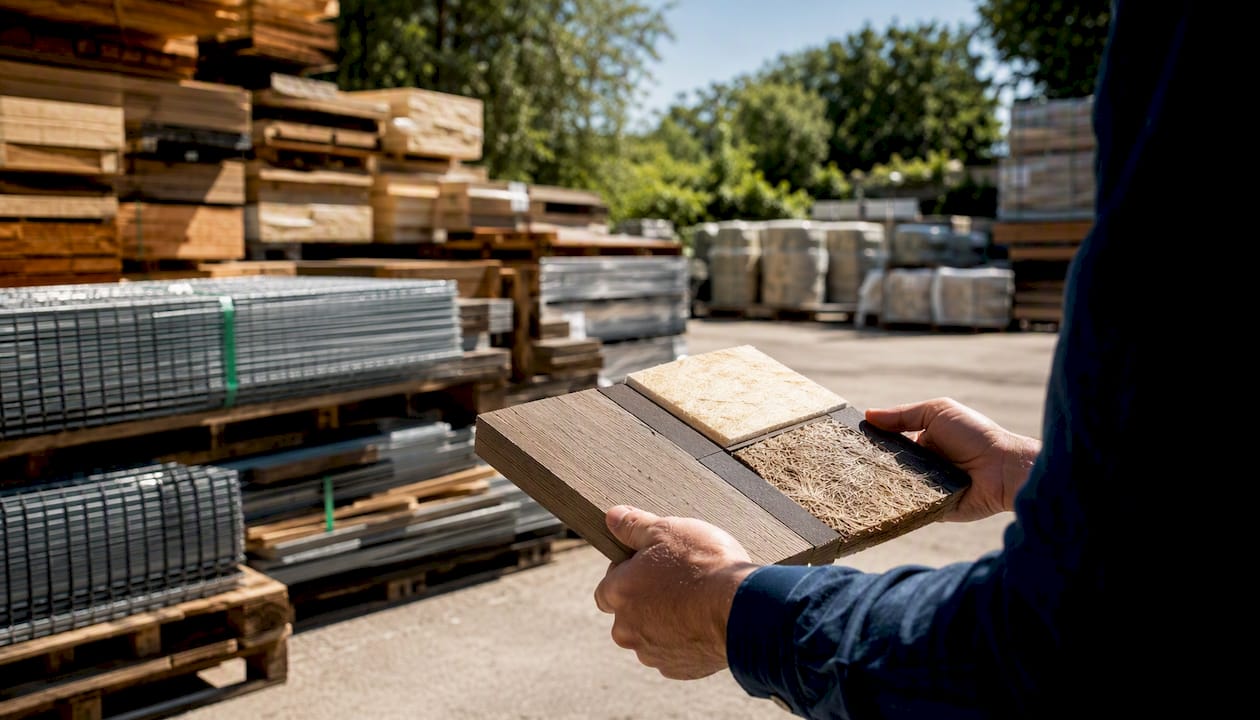
Procurement clauses are the mechanism that transfers environmental performance requirements from the developer to the supply chain. A contract that requires Environmental Product Declarations (EPDs) from structural material suppliers, or that sets a maximum embodied carbon threshold per square foot, creates accountability that a voluntary aspiration cannot. Advancing Net Zero’s guidance is direct on this point: net-zero in buildings succeeds when procurement and contracting transfer performance requirements to supply chains rather than rely on post-construction mitigation.
Operations and maintenance integration
Operational carbon, the energy a building consumes over its lifetime, typically dwarfs embodied carbon in total impact. Partnerships that stop at construction handover miss the majority of the opportunity. Including the facility manager in the governance structure from the design phase, and writing operational KPIs into the O&M contract, closes this gap.
Digital building controls and energy management
Software-driven building management systems (BMS) and IoT sensor networks generate the granular data that makes monitoring credible. The Green Software Foundation’s target of a 45% reduction in ICT emissions by 2030 signals that the technical community is increasingly engaged in this space, and building controls are a direct application. Partnerships that include a digital infrastructure layer tend to produce verifiable data rather than estimated figures.

Pro Tip: Require that the design team run at least one LCA scenario during schematic design, before design development begins. This single requirement, written into the design services agreement, costs almost nothing and can prevent millions of dollars in embodied carbon that would otherwise be locked in.
How to set up a partnership step by step
The process follows a six-stage sequence: Align, Structure, Contract, Pilot, Measure, Scale. Each stage has a defined output that gates the next.
Align on goals. Both parties document a shared environmental target with a specific metric and a deadline. Use the UN SDGs or a recognized standard like LEED or the Net Zero Carbon Buildings Commitment as the reference frame. Output: a one-page goal alignment statement signed by both project sponsors.
Structure governance. Assign named leads for sustainability, community engagement, and finance on each side. Define decision rights: who can approve a design change that affects carbon, and who can authorize additional budget for a green measure. Output: a governance chart with names, roles, and escalation paths.
Draft the contract. Include three categories of environmental clauses: performance requirements (e.g., maximum operational energy intensity in kBtu/sf/year), procurement requirements (e.g., EPDs required for concrete and steel), and data-sharing obligations (e.g., monthly energy data shared with the sustainability lead). For guidance on negotiating enforceable green conditions during the approvals process, review the specific contractual approaches that have held up in practice. Output: a contract with environmental clauses reviewed by both legal teams.
Launch a pilot. Scope the pilot to one building, one phase, or one procurement category. Budget for a baseline carbon measurement, an LCA run, and a community engagement touchpoint. Typical pilot duration is 6–12 months. Output: a pilot report with baseline data, lessons learned, and a recommendation on scaling.
Measure against KPIs. Track operational energy intensity, Scope 1 and 2 GHG emissions, embodied carbon per square foot, and water use intensity. Assign each metric to a named owner and a reporting cadence. Output: a quarterly dashboard shared across all governance parties.
Scale and replicate. Use the pilot’s data to refine procurement clauses, update the design brief, and build the case for green financing on subsequent phases. Output: a replication playbook that can be applied to the next project without starting from scratch.
Pro Tip: Keep the pilot budget modest and the scope narrow. A pilot that tries to demonstrate every environmental goal at once tends to produce inconclusive data. One clear metric, measured rigorously, is more persuasive to a developer’s finance team than a dozen loosely tracked indicators.
What standards, tools, and financing options should you evaluate?
Structuring a developer environmental partnership in the United States means choosing from a specific set of standards, technology tools, and financing vehicles. The categories to consider are: recognized standards and commitments, design and LCA tools, monitoring platforms, and green finance.
Standards and commitments
Advancing Net Zero / WorldGBC: The Net Zero Carbon Buildings Commitment provides a recognized framework for whole-life carbon commitments that developers, owners, and contractors can sign.
USGBC / LEED: LEED remains the most widely recognized green building certification in the US, with clear performance thresholds and a third-party verification pathway.
UN SDGs: Goal 17 provides a cross-sector reporting frame that institutional investors and public agencies recognize.
Design and LCA tools
BIM platforms with embedded LCA modules (such as Autodesk Revit with Insight, or Tally for Revit) allow design teams to iterate on embodied carbon during schematic design. The Autodesk University research on embedding LCA into design software confirms that earlier visibility into carbon impacts enables lower-cost reductions. Energy modeling tools like EnergyPlus and eQUEST remain standard for operational carbon projections.
Monitoring platforms
IoT-enabled building management systems from providers such as Siemens Desigo CC or Johnson Controls Metasys generate the granular operational data that supports third-party verification. For projects with a digital advocacy component, a well-structured digital presence helps communicate environmental progress to stakeholders and the public.
Green financing options
Financing Category | Typical Use Case | Common US Providers |
Green bonds | Large capital projects with documented environmental KPIs | Municipal issuers, corporate issuers, Fannie Mae |
Green bank loans | Decarbonization and resilience projects at the building or portfolio level | NY Green Bank, state green banks |
Federal tax incentives | Energy efficiency upgrades, renewable energy installations | IRS (IRA provisions), DOE programs |
Grants | Pilot projects, community resilience, habitat restoration | EPA, HUD, state environmental agencies |
Regulatory-driven offset mechanisms are also emerging in the US, following patterns established elsewhere. US jurisdictions are developing analogous frameworks, and partnerships that anticipate these requirements can structure compliance mechanisms into the project from the start.
How community engagement and permitting unlock sustainability outcomes
Community engagement is not a box to check after the environmental plan is written. When done before design freeze, it is one of the most direct accelerators of both permitting speed and environmental ambition.
New Jersey Future’s guidance demonstrates the mechanism clearly: aligning a project with a city’s existing infrastructure goals, such as stormwater management or habitat restoration, secures public support and streamlines permitting. A developer who arrives at a planning board with a project that solves a documented community problem faces a fundamentally different political environment than one who arrives asking for an exception.
A practical community engagement checklist for developer sustainability projects:
Start at pre-application. Engage community stakeholders before the permit application is filed, not after opposition forms.
Map stakeholders granularly. Identify neighborhood associations, environmental justice groups, tribal nations where applicable, and local environmental NGOs. Each group has different priorities and different communication channels.
Frame environmental measures as community assets. Connect stormwater features to flood risk reduction, green roofs to urban heat island mitigation, and habitat corridors to local recreation. This reframing, from regulatory compliance to community benefit, consistently reduces opposition.
Document community input formally. A community benefits agreement (CBA) or a documented engagement record strengthens the permitting record and signals good faith to reviewing agencies.
Assign a named community liaison. This person attends public meetings, responds to concerns within 48 hours, and reports back to the governance structure.
Coordinate with local NGOs. Organizations like Community Sustainability Partners (US) can provide credibility, local knowledge, and coalition support that a developer’s team cannot generate internally.
Pro Tip: The environmental messaging strategies that work best in permitting contexts are those that connect the project’s environmental features to a specific, named local problem. “This project reduces stormwater runoff into the Elm Creek watershed by X gallons per storm event” is more persuasive to a planning board than “this project meets LEED Silver.”
Short US examples of developer partnerships that delivered results
Evidence that structured collaboration produces real outcomes matters when you are making the case internally for the investment a formal partnership requires.
Frog Creek Partners and Microsoft, Cheyenne, Wyoming. Frog Creek Partners launched a water replenishment initiative with support from Microsoft, installing stormwater filtration infrastructure reported to prevent a significant amount of pollution annually. The mechanism: corporate climate investment funding a place-based environmental project through a structured partnership. Lesson: Corporate sustainability commitments can fund local infrastructure when the partnership frames the project as a water-replenishment asset aligned with the funder’s goals.
Swinerton and cross-value-chain procurement. Swinerton, a US general contractor with an active sustainability program, has embedded environmental performance requirements into its subcontractor procurement process, requiring material suppliers to provide EPDs and tracking construction waste diversion rates at the project level. The mechanism: procurement clauses that transfer environmental accountability to the supply chain. Lesson: A contractor who already has environmental procurement standards in place is a force multiplier for a developer partnership, because the compliance infrastructure already exists.
WorldGBC Net Zero Carbon Buildings Commitment signatories. Multiple US-based developers and owners have signed the Net Zero Carbon Buildings Commitment, committing to net-zero operational carbon by 2030 and whole-life carbon by 2050. The mechanism: a public commitment that creates accountability to a recognized standard and signals credibility to green finance providers. Lesson: Signing a recognized commitment before a project begins changes the negotiating dynamic with both finance partners and community stakeholders.
For a deeper look at the trade-offs developers navigate in these collaborations, the developer environmental compromises guide covers the tactical approaches that project teams use to advance climate resilience within commercial constraints.
How do you measure success in a developer sustainability partnership?
Measurement is where many partnerships lose credibility. Vague commitments to “reduce carbon” or “improve sustainability” cannot be verified, cannot be reported to investors, and cannot be used to demonstrate progress to a planning board. A practical measurement framework assigns specific KPIs, cadences, owners, and verification pathways before the project breaks ground.
The top KPIs for a developer environmental partnership:
Operational energy intensity: measured in kBtu per square foot per year; owned by the facility manager; reported annually.
Scope 1 and 2 GHG emissions: measured in metric tons CO2e; owned by the developer/owner; reported annually against a baseline year.
Embodied carbon: measured in kg CO2e per square foot of gross floor area; owned by the design team; assessed at schematic design, design development, and construction completion.
Water use intensity: measured in gallons per square foot per year; owned by the facility manager; reported annually.
Construction waste diversion rate: measured as a percentage of total waste diverted from landfill; owned by the general contractor; reported at practical completion.
Metric | Cadence | Owner | Verification Option |
Operational energy intensity | Annual | Facility Manager | LEED / USGBC Energy & Atmosphere credit |
Scope 1 and 2 GHG emissions | Annual | Developer / Owner | Third-party GHG verification, CDP reporting |
Embodied carbon (kg CO2e/sf) | Three project milestones | Design Team | Third-party LCA verification, EC3 tool |
Water use intensity | Annual | Facility Manager | LEED Water Efficiency credit |
Construction waste diversion | At practical completion | General Contractor | LEED Materials & Resources credit |
Third-party verification through USGBC’s LEED program is the most widely recognized pathway in the US market and carries weight with both lenders and planning agencies. For projects targeting whole-life carbon, a third-party LCA verification using the EC3 (Embodied Carbon in Construction Calculator) tool provides a credible, industry-accepted methodology.
When should you bring in a public-affairs partner?
The answer is before design freeze, and almost certainly before you file a permit application. By the time opposition organizes or a planning board raises concerns, the cost of course-correcting is an order of magnitude higher than the cost of proactive engagement.
Specific triggers that justify bringing in a public-affairs partner:
The project requires a discretionary permit, a zoning variance, or an environmental impact review.
Vocal opposition has already formed, or the project is in a jurisdiction with a history of contested approvals.
The project spans multiple jurisdictions with different regulatory requirements.
Funding is contingent on demonstrating community benefits or environmental justice outcomes.
The developer lacks internal capacity for sustained community outreach over a multi-year project timeline.
The environmental goals of the project are complex enough to require strategic messaging to translate them for a non-technical audience.
Aligning a project with local infrastructure goals is one of the most reliable ways to reduce permitting friction, and a public-affairs partner is the party best positioned to identify those alignment opportunities and communicate them to the right stakeholders.
Amautapublicaffairs delivers a defined set of services in this context:
Community mapping: identifying and prioritizing stakeholders by influence, interest, and likely position on the project.
Message strategy: developing environmental messaging that connects project features to community priorities, using the community engagement strategy framework that aligns developer objectives with neighborhood concerns.
Coalition building: recruiting local environmental organizations, business associations, and civic groups to support the project publicly.
Digital advocacy: deploying targeted digital campaigns to build visible community support and counter misinformation.
Permitting support: preparing community benefit documentation, attending public hearings, and coordinating with agency staff throughout the review process.
Expected outcomes include reduced permitting timelines, documented community support for the project record, and a stronger position in green finance negotiations where community benefit is a scoring criterion.
Pro Tip: Bring the public-affairs partner into the project team’s governance structure, not as an external vendor. A firm that attends design meetings and understands the project’s environmental commitments can communicate them far more credibly than one briefed only on the day of a public hearing.
The part of developer partnerships most teams get wrong
The conventional wisdom on developer environmental partnerships focuses almost entirely on the contract: get the right clauses, set the right targets, and the outcomes will follow. That framing is incomplete, and in practice it is often counterproductive.
The most durable partnerships are built on commercial alignment, not contractual obligation. A developer who sees environmental performance as a cost center will find ways to minimize compliance with even well-drafted clauses. A developer who understands that green credentials reduce permitting risk, attract institutional capital, and command a premium in the leasing market will advocate for environmental measures internally, without being pushed.
The practical implication is that the most important conversation in a developer partnership is not about carbon targets. It is about the developer’s commercial model and where environmental performance intersects with their financial interests. That conversation should happen before the governance agreement is drafted, not after. Framing environmental goals as resilience assets and community benefits, rather than regulatory burdens, is the single most reliable way to shift a developer from reluctant compliance to genuine co-design.
The second thing most teams underestimate is timing. After schematic design is approved, the structural system is set, the major material choices are made, and the opportunity cost of changing them rises sharply. Organizations that engage developers at the project inception stage, rather than at the permitting stage, consistently achieve better environmental outcomes at lower cost.
For teams navigating the community support challenges that accompany large energy and infrastructure projects, the same timing principle applies: early engagement shapes the narrative; late engagement manages the damage.
Amautapublicaffairs helps you move from commitment to approved project
When your organization is ready to move from a signed environmental commitment to a project that actually gets built, the gap between those two points is almost always a community and permitting challenge, not a technical one. Amautapublicaffairs works directly with developers, environmental organizations, and infrastructure sponsors to close that gap through community engagement, permitting strategy, coalition building, and digital advocacy.
Where other approaches leave you managing opposition reactively, Amautapublicaffairs builds the community record that makes approvals faster and green finance applications stronger. Clients working on land use and developer partnerships can expect a mapped stakeholder landscape, a message strategy grounded in the project’s specific environmental benefits, and a coalition that shows up at public hearings. The land management and permitting services are designed specifically for the complexity of multi-jurisdiction projects where environmental goals and community relations intersect.
To discuss your project and get a clear picture of where public-affairs support would have the most impact, contact Amautapublicaffairs through the services page.
Sources
The resources below are the primary references for the standards, programs, and frameworks covered in this guide.
Recommended
Comments