
Section 106 Consultation for Federal Staff: SHPO 30 Day Response
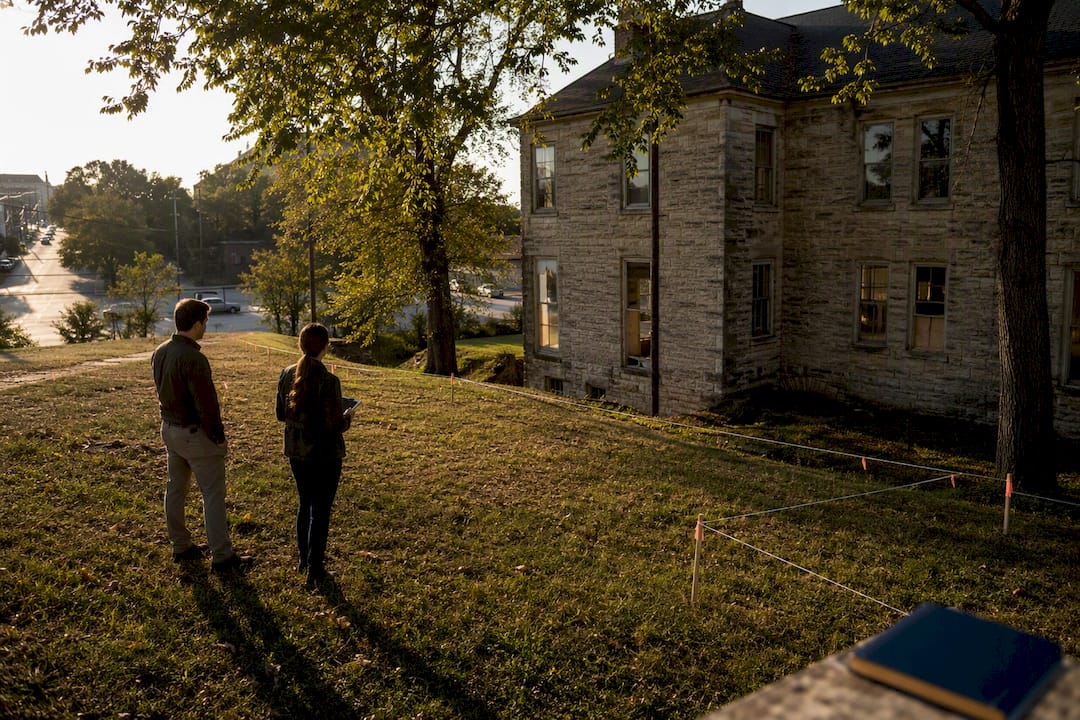
Section 106 consultation is the process required by the National Historic Preservation Act, under which a federal agency must seek, discuss, and consider the views of consulting parties before approving an undertaking that may affect historic properties. It applies whenever a project has a federal nexus, meaning federal funding, licensing, or permitting, and could affect a property listed in or eligible for the National Register of Historic Places. Under 36 CFR Part 800, the agency, not the applicant or contractor, holds legal responsibility for completing and documenting that consultation.
TL;DR:
Initiating Section 106 review requires confirming the project has a federal nexus and defining the Area of Potential Effect to avoid unnecessary delays.
Properly identifying and including all relevant consulting parties, especially tribes and local stakeholders, from early in the process prevents disputes and streamlines decision-making.
A complete, well-documented submission, including maps and early mitigation plans, is essential to avoid costly rework and schedule overruns.
Early, continuous tribal engagement and respecting confidentiality requests enhance trust and avoid delays caused by late tribal consultations.
Delays often stem from coordination issues among agencies, tribes, and project teams, making proactive planning and stakeholder communication crucial for timely completion.
Table of Contents
What Triggers Section 106 Review?
Section 106 review starts with a single legal question: is there an “undertaking”? The regulations define an undertaking as any project, activity, or program funded, licensed, or approved by a federal agency, whether the agency carries it out directly or delegates it to a state, local government, or private applicant. Once an undertaking is confirmed, the agency defines the Area of Potential Effect, or APE, the geographic zone where the project could directly or indirectly change the character of a historic property.
Common triggers include:
Federal grants for infrastructure, housing, or broadband deployment
Permits issued by agencies like the Army Corps of Engineers or FCC
Federal construction, renovation, or property disposal
Licensing actions, including telecommunications tower approvals
If no historic properties exist within the APE, or the agency determines the project will have no effect on eligible properties, the review can close quickly with a documented finding. Many projects end at this stage, but the finding itself still requires consultation with the SHPO or THPO before it becomes final.
Who Are the Consulting Parties in a Section 106 Review?
The regulations name specific statutory consulting parties and leave room for the agency to invite others based on demonstrated interest. Getting this list right early prevents disputes later, since a party left out can challenge the adequacy of consultation after the fact.
Typical participants include:
The State Historic Preservation Officer (SHPO), or the Tribal Historic Preservation Officer (THPO) when a project sits on tribal land
Federally recognized tribes with cultural or religious ties to the APE, even off tribal land
The applicant seeking the federal permit, license, or funding
Local governments and members of the public with a demonstrated interest in the outcome
The Advisory Council on Historic Preservation (ACHP), which oversees the process and can be invited to participate directly in complex or contested cases
Agencies have discretion over other requests for consulting-party status, but that discretion should be exercised transparently and documented, not used to quietly narrow the room.
Pro Tip: Send SHPO and tribal contacts a project summary and map before the formal initiation letter goes out. A five-minute pre-consultation call often surfaces concerns that would otherwise cost weeks once the clock is running.
How Does the Four-Step Section 106 Process Work?
The regulations at 36 CFR Part 800 break consultation into four sequential steps, each producing a specific output that carries into the next stage.
Initiation. The agency sends an initiation letter and project package to SHPO/THPO and other identified consulting parties, describing the undertaking, its APE, and the agency’s proposed approach to identifying historic properties.
Identification. The agency conducts records searches, field surveys, and consultation to determine which properties within the APE are listed on or eligible for the National Register of Historic Places.
Assessment of effects. The agency applies the adverse effect criteria in 36 CFR Part 800.5, distinguishing “no adverse effect” from “adverse effect,” and seeks SHPO or THPO concurrence on that finding.
Resolution. For adverse effects, the agency works with consulting parties toward avoidance, minimization, or mitigation measures, typically documented in a Memorandum of Agreement (MOA) or, for programs with recurring undertakings, a Programmatic Agreement (PA) that may go to the ACHP for review.
Each step depends on the last. A weak identification effort produces an assessment nobody trusts, and a rushed assessment produces a resolution consulting parties won’t sign.
What Are the Special Obligations for Tribal Consultation?
Agencies must consult with any federally recognized tribe that may attach religious or cultural significance to properties within the APE, regardless of whether the project sits on tribal land. This obligation exists independently of SHPO consultation and cannot be satisfied by simply copying tribes on correspondence meant for the state office.
Government-to-government protocol matters here. Tribes may request specific consultation procedures, decline to have an applicant lead discussions on the agency’s behalf, or ask for confidentiality around sensitive site information, and the ACHP’s tribal consultation handbook lays out how agencies should accommodate those requests.
Practical steps that help:
Reach out well before the identification phase begins, not after a draft finding is written
Use the Tribal Consultation and Notification System (TCNS) or a Notice of Other Proposed Undertakings (NOO) where the agency participates in that system
Keep a written record of every outreach attempt, including nonresponses, since silence is not the same as concurrence
How Long Does Section 106 Consultation Take?
There is no single regulatory clock for the entire Section 106 process, and that ambiguity catches a lot of project managers off guard when they build a schedule around a fixed number of weeks. What does exist are response-window anchors: SHPOs generally have 30 calendar days to respond to a complete initiation letter, and the ACHP, when formally invited into a consultation, works on a 45-day review standard.
The most common delay isn’t a slow SHPO response. It’s a late start. Initiating Section 106 review after design work is already underway, rather than during early project planning, is a routine and avoidable practitioner error that leads to costly redesign later.
Other frequent pitfalls:
APE boundaries drawn too narrowly, forcing a redo once new information surfaces
Incomplete initiation packages missing maps, scope details, or contact lists
Tribal outreach added as an afterthought instead of built into the initial timeline
Send complete packages the first time, and schedule a pre-consultation call with SHPO staff before the formal clock starts.
What Documentation Does Section 106 Require?
Section 106 produces a paper trail that has to hold up on its own, separate from any NEPA environmental record, even when the two processes run in parallel on the same project.
Agencies should retain:
The initiation letter, project description, and APE maps sent to consulting parties
Technical reports supporting National Register eligibility determinations
SHPO/THPO concurrence letters on “no effect” or “no adverse effect” findings
Signed MOAs or PAs, along with evidence that mitigation commitments were carried out
Section 106 findings typically get folded into NEPA documentation as a technical appendix, and grant recipients often need to show a completed Section 106 record, including SHPO sign-off, before a grant milestone like a Finding of No Significant Impact can proceed. The agency’s responsible official, not the contractor or applicant, signs the final determination.
MOA, PA, Concurrence, or Termination: Which Resolution Fits?
Resolution takes one of a few forms, and each carries different obligations going forward.
A Memorandum of Agreement (MOA) applies to a single project with an adverse effect finding, spelling out specific mitigation commitments like data recovery, documentation, or design changes.
A Programmatic Agreement (PA) covers recurring or multi-phase undertakings, such as a grant program funding dozens of similar projects, and sets a standing framework instead of negotiating terms each time.
A No Adverse Effect concurrence letter from SHPO or THPO closes the process without further mitigation once the agency demonstrates the project won’t harm the property’s character.
Termination happens when consulting parties can’t reach agreement. The agency can request the ACHP’s comments directly, and the head of the agency must formally consider those comments before making a final decision, since consultation requires weighing input but doesn’t mandate a preservation outcome.
Practical Checklist Before You Start Section 106 Consultation
Before sending anything to SHPO, confirm the basics are locked down.
Confirm the federal nexus and draft a preliminary APE map.
Assemble baseline documents: prior surveys, National Register data, and project drawings.
Identify likely consulting parties, including any tribes with historical ties to the area.
Draft the initiation letter with a clear project description, maps, and a contact list.
Track SHPO/THPO response windows on a shared calendar visible to the whole project team.
Document every meeting, call, and written exchange as it happens, not weeks later.
Begin an MOA draft as soon as an adverse effect looks likely, rather than waiting for a final determination.
Pro Tip: Store Section 106 correspondence and NEPA files in the same case folder from day one. Grant closeout reviewers almost always ask for both, and hunting for scattered emails months later costs more time than the filing system would have.
What Role Do Local Governments and Other Stakeholders Play?
Federal agencies and tribes carry the statutory weight in Section 106, but local governments and community stakeholders shape whether a project actually moves forward without friction. A city planning department, county historic commission, or neighborhood association often holds institutional memory about a property that no federal database captures, and that knowledge can change how an agency defines the APE or interprets a property’s significance.
Local governments frequently hold consulting-party status in their own right, particularly when the undertaking involves a local permit alongside a federal one, such as a bridge replacement requiring both a Corps of Engineers permit and a city right-of-way approval. Even where a jurisdiction lacks formal consulting-party standing, agencies routinely extend an invitation because local officials field the calls from residents after a project breaks ground.
Community members without any regulatory standing still matter to how a project lands politically, even when they can’t slow the federal clock. A historic district association, a group of longtime residents, or a local business coalition can generate public pressure that outlasts the formal comment period, showing up at city council meetings long after the SHPO has signed off. Agencies that treat these stakeholders as background noise often find themselves managing a public relations problem that a few structured meetings could have prevented. Stakeholder communication strategies built around clear, consistent messaging tend to keep these secondary audiences informed without turning every meeting into a renegotiation of the federal findings.
What Happens When Section 106 Consultation Falls Short?
Inadequate consultation doesn’t just create paperwork problems. It creates litigation exposure. Courts have vacated federal approvals when agencies failed to genuinely consult, rather than simply notify, parties entitled to participate under the regulations, and a vacated approval can halt a project that already has contractors mobilized and financing in place.
The financial risk compounds fast. A project that proceeds without proper Section 106 clearance can lose federal funding eligibility retroactively, trigger a grant clawback, or face an injunction that stops construction mid-phase, and none of those outcomes are cheap to unwind once concrete has been poured.
Beyond the legal exposure, thin consultation damages the agency’s credibility with the same tribes, SHPOs, and communities it will need to work with on the next project. A tribe that felt sidelined on one undertaking arrives at the next one expecting to be sidelined again, and that expectation shapes how quickly, or slowly, future consultations move. The ACHP frames consultation as an active exchange aimed at genuine agreement on avoiding or mitigating harm, not a procedural box to check, and agencies that treat it as the latter tend to end up back at the table anyway, on worse terms, after a challenge.
Where a finding gets contested, the ACHP’s comment process gives agencies one more chance to correct course before a decision becomes final, but relying on that safety net as a substitute for real consultation up front is a costly habit.
What Does Effective Tribal Consultation Look Like in Practice?
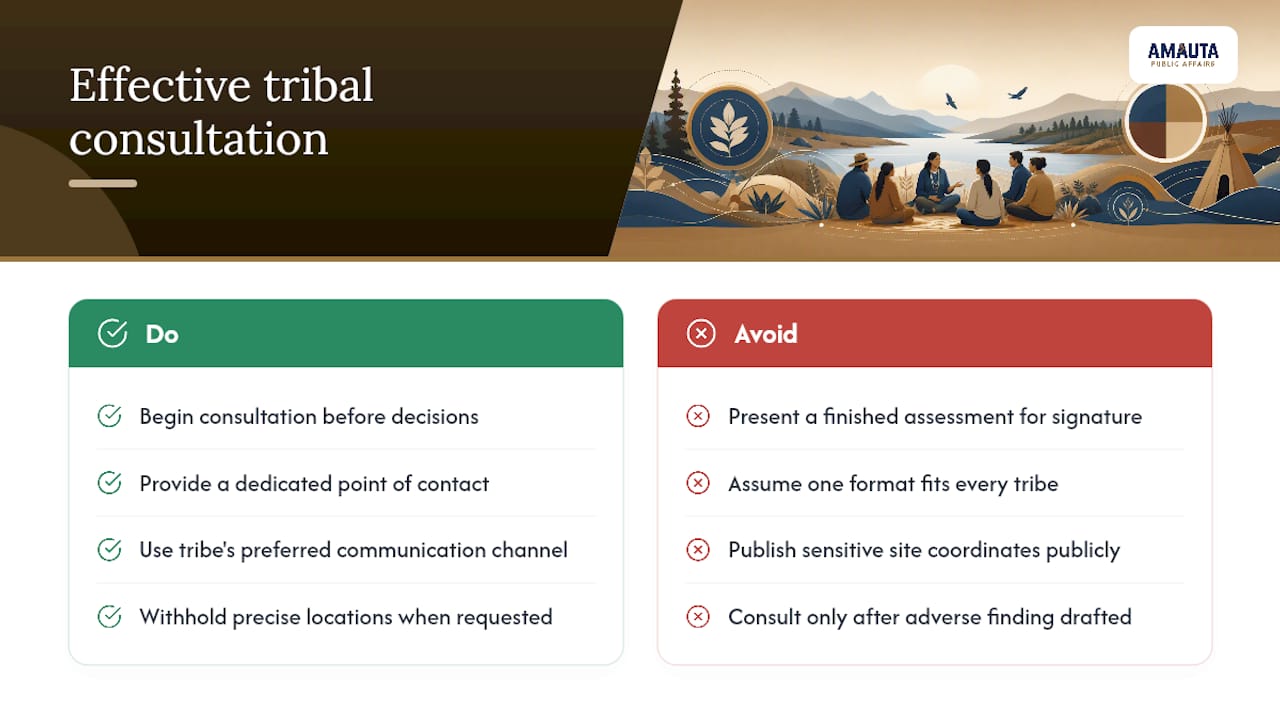
The strongest tribal consultation efforts share a common trait: they start before the agency has already decided what it wants to do. Reaching out to a tribal historic preservation officer with an open question about a property’s significance produces a fundamentally different conversation than presenting a finished environmental assessment and asking for a signature.
Effective approaches typically include a dedicated point of contact who understands the tribe’s preferred communication channel, whether that’s the Tribal Consultation and Notification System, a direct letter to a tribal historic preservation officer, or an in-person meeting requested by the tribe itself. Some tribes prefer written notices with a defined response window; others want a phone call first to establish the relationship before paperwork enters the picture. Assuming one format works for every tribe consulted on a project is a fast way to undermine the process before it starts.
Confidentiality handling separates strong consultation from weak consultation. When a tribe identifies a site with cultural or religious significance, agencies that agree to withhold precise location data from public project documents, while still meeting their documentation obligations internally, tend to build the kind of trust that makes the next consultation faster. Agencies that publish sensitive site coordinates in a public NEPA appendix, even accidentally, can permanently damage that relationship.
Timing separates the rest. Tribes consulted during the identification phase, while the agency is still deciding which properties matter, can meaningfully shape the outcome. Tribes consulted only after an adverse effect finding is drafted are being asked to react to a decision already made, and that distinction is rarely lost on the tribal representatives sitting across the table.
What Are the Biggest Challenges in Running a Section 106 Consultation?
The most persistent challenge isn’t legal complexity. It’s coordination across parties who have no obligation to move on the same schedule. A SHPO office juggling dozens of active reviews, a tribe balancing multiple federal agencies requesting consultation simultaneously, and a project manager under pressure from a funding deadline are rarely aligned on urgency, and that mismatch is where most delays originate.
Scope creep on the Area of Potential Effect creates a second recurring headache. An APE drawn too tight during initiation often has to expand once identification work reveals a property just outside the original boundary, forcing a partial restart of consultation with parties who thought their input was finished.
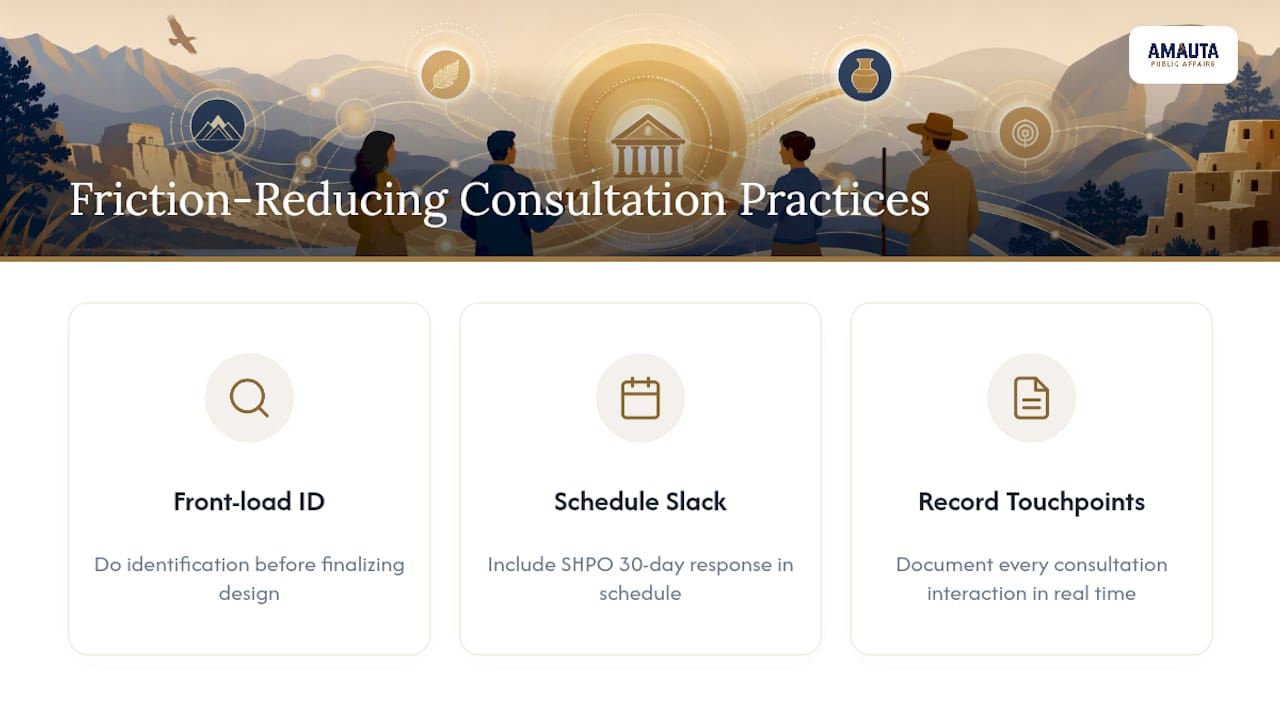
Best practices that consistently reduce friction include front-loading the identification work before finalizing project design, so effects assessments reflect real conditions rather than assumptions. Building slack into project schedules for the SHPO’s 30-day response window, rather than treating it as a best-case estimate, keeps a single slow response from derailing a construction timeline. Documenting every consultation touchpoint in real time, rather than reconstructing a record after the fact, protects the agency if a finding is later challenged.
The role of a well-designed community engagement strategy becomes clear here: consultation that treats each stakeholder group as part of an ongoing conversation, rather than a series of one-off notifications, tends to surface disagreements early, when they’re cheap to resolve, instead of late, when they’re not.
A Practitioner’s Take on Making Consultation Work
Most guidance on Section 106 treats consultation as a compliance checkbox, but the agencies that get the best outcomes treat it as a communication campaign with a legal deadline attached. Early, transparent engagement with SHPO, tribes, and local stakeholders doesn’t just satisfy 36 CFR Part 800. It builds the shared understanding that keeps a mitigation agreement from unraveling six months later.
The campaign-style approach that works best borrows from public affairs practice more than legal practice: iterative feedback loops, targeted outreach tailored to each stakeholder group, and messaging that adapts as new concerns surface. Meeting design matters more than agencies give it credit for, and a poorly structured public meeting can generate more opposition than the project itself deserves. Careful recordkeeping and folding community input directly into mitigation measures, rather than treating it as background noise, is what separates a consultation record that survives scrutiny from one that invites a challenge.
— Ignacio
How AMAUTA Public Affairs Supports Section 106 Compliance
Legal responsibility for Section 106 findings stays with the federal agency, full stop. What Amauta-specific agencies and project sponsors often lack is the bandwidth to run the community side of consultation well while everything else on a project timeline is also moving.
Consulting firms can assist agency and applicant teams on the parts of consultation that determine whether a project earns public support or fights it every step of the way: community engagement planning, stakeholder messaging, meeting facilitation, and documentation support that keeps a consultation record organized instead of scattered across inboxes. That’s a meaningful advantage over handling outreach ad hoc with internal staff who are already stretched across permitting, design, and grant reporting. Such firms do not replace the agency’s legal duties under Section 106. They handle campaign-style groundwork, community landscape assessment, and messaging strategies that can help make consultation move faster and land better with the people affected by it. Explore land management services to see how a tailored engagement plan could fit your next Section 106 project, or review the full service offerings to start a conversation about your timeline.
Sources
Recommended
Comments